
Diagnosis · Updated 24 August 2026
Why Stronger's two-slide TikTok slideshow worked
An 8.9M Stronger TikTok slideshow used breakup tension, a one-swipe reveal, and app proof. See what to test instead of copying the hook.
The Stronger “he hates me” slideshow worked because slide one opened a specific personal question and slide two answered it with a visible reversal the product could help prove. The useful thing to copy is that question-to-proof sequence, not the breakup line or the number of slides.
The live controls make the distinction unusually clear. The cited post had 8,880,949 plays when captured on 24 August 2026, or 1,570 times the median of 33 recent photo posts returned for the same account. Yet six ordinary controls were also two-slide photo posts, and other two-slide posts from the account had travelled much further.
This is an independent case study of public third-party content, not a reels.chat campaign or customer result. reels.chat did not create or publish the content and has no private campaign analytics for it.
The two-slide TikTok result is real. The easy explanation is not
An X explainer published on 10 August 2026 supplied the starting hypothesis: emotional bait on the first image, visual proof on the second, and the app inside the payoff.
That is a useful description of the creative. It is not a prevalence study, and it is not a controlled test. One X explainer cannot tell us how often breakup openings work, whether two slides beat three, or which part of this post caused distribution.
The sample worth investigating is the TikTok post itself. It came from the Stronger gym-app account, which had 36,526 followers in the profile snapshot.
The post and its same-creator comparisons were hydrated from TikHub App V3 on 24 August 2026. The cards below preserve the public counters, first-slide covers, and links to each photo post.
Nine photo posts, one creator, all measured live
The latest 33 photo posts had a median of 5,655 plays. The hot row is context, not the baseline.
Breakouts and counterexamples
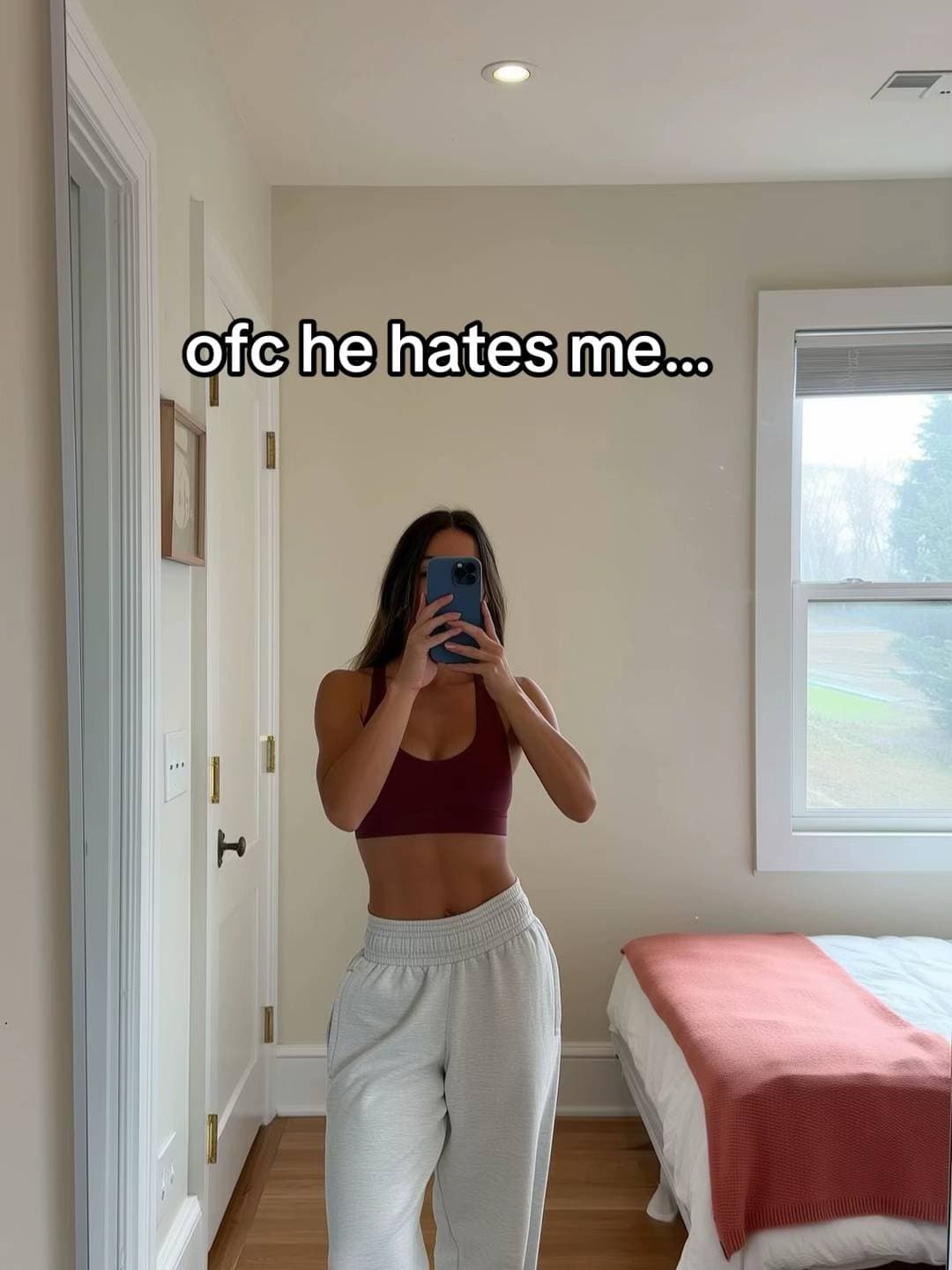

“ofc he hates me...” becomes “I won the breakup” over a Stronger muscle map.

“torn in pieces,” another two-slide photo post from the same account.

“check mate,” a different two-slide setup that also exceeded the cited post.
Ordinary two-slide controls
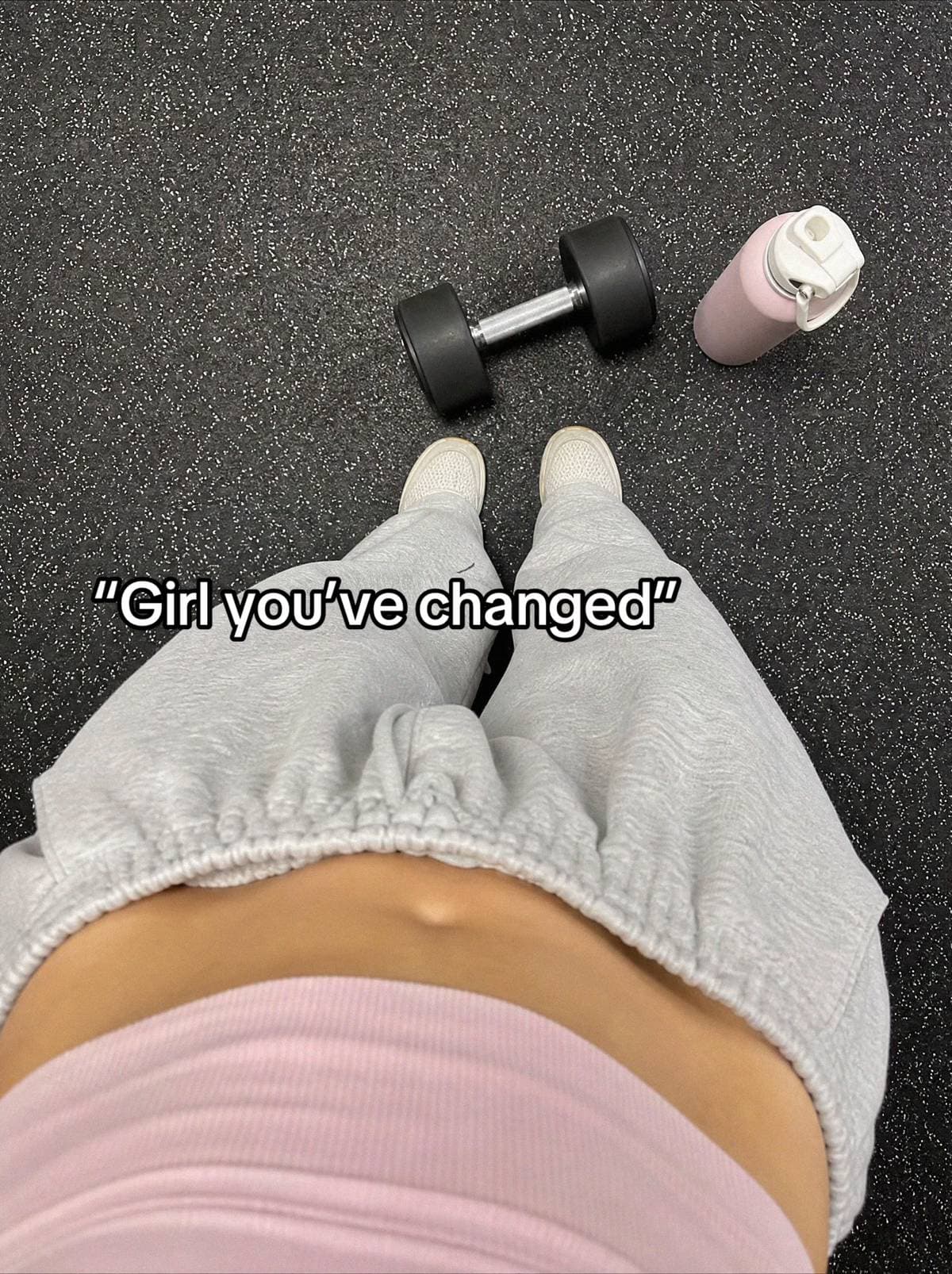
“i’m different now,” a two-slide post at the live photo median.
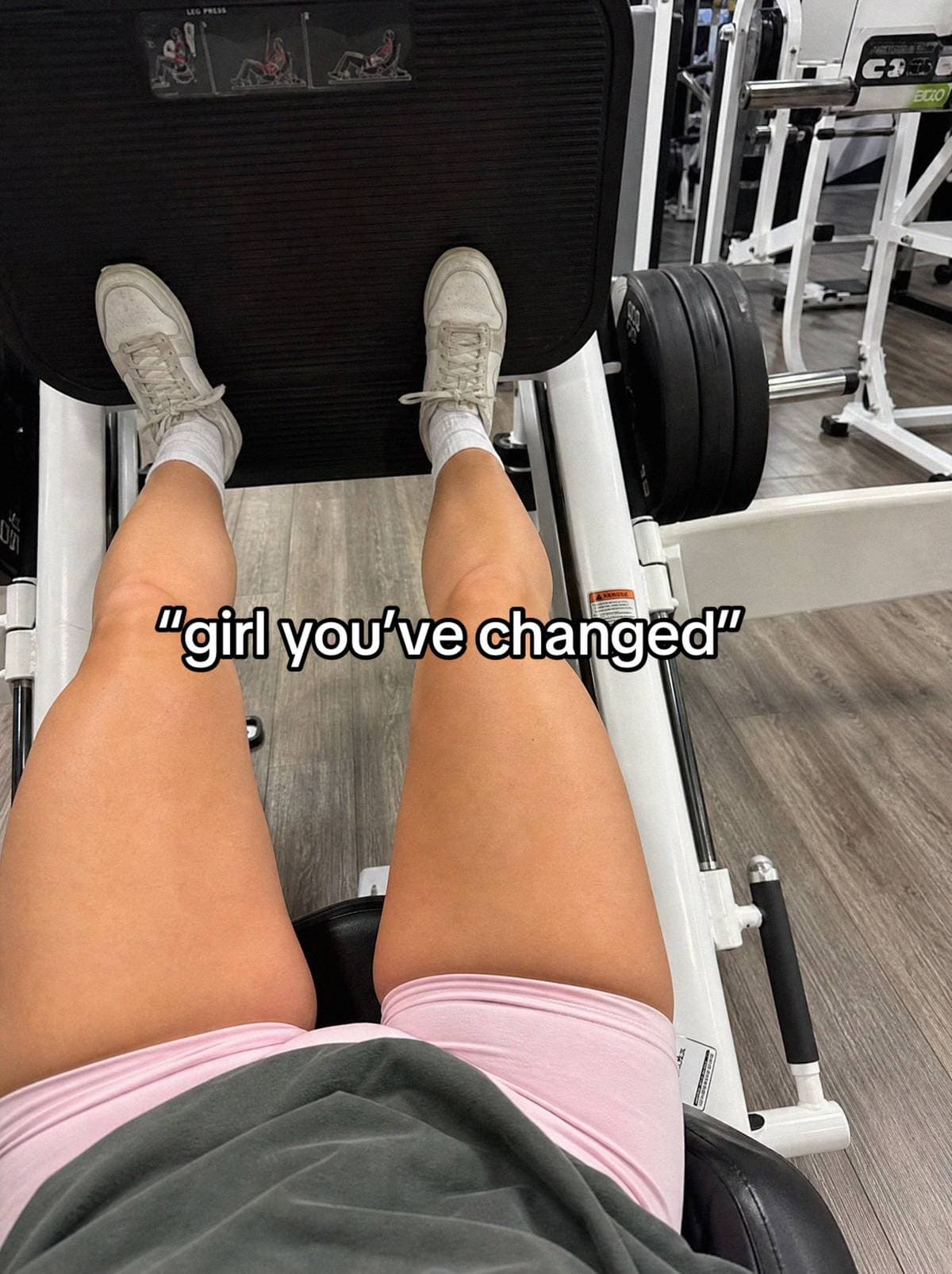
“tell me more,” another ordinary two-slide execution.
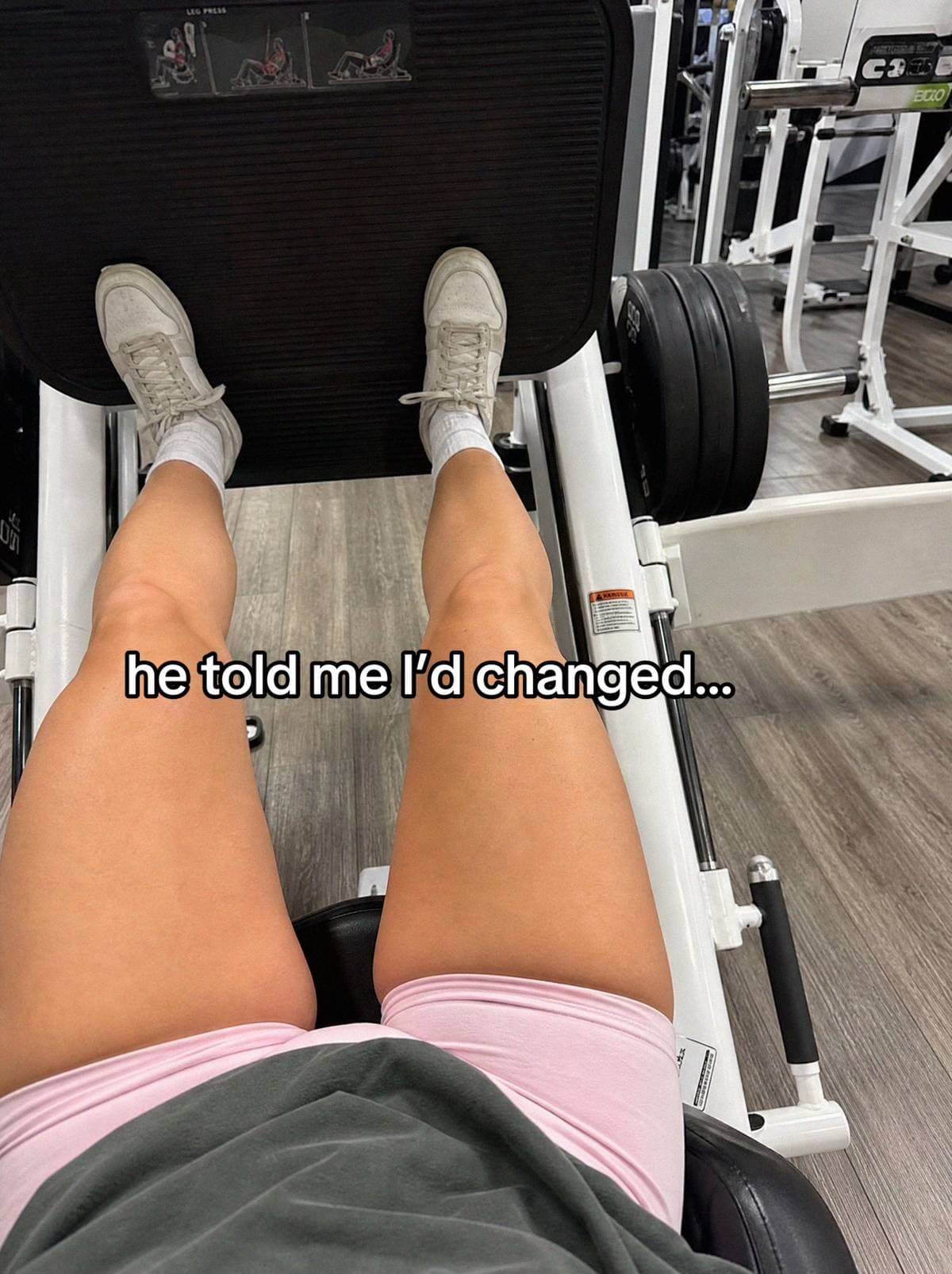
“I’ll take that,” two slides with an ordinary result.
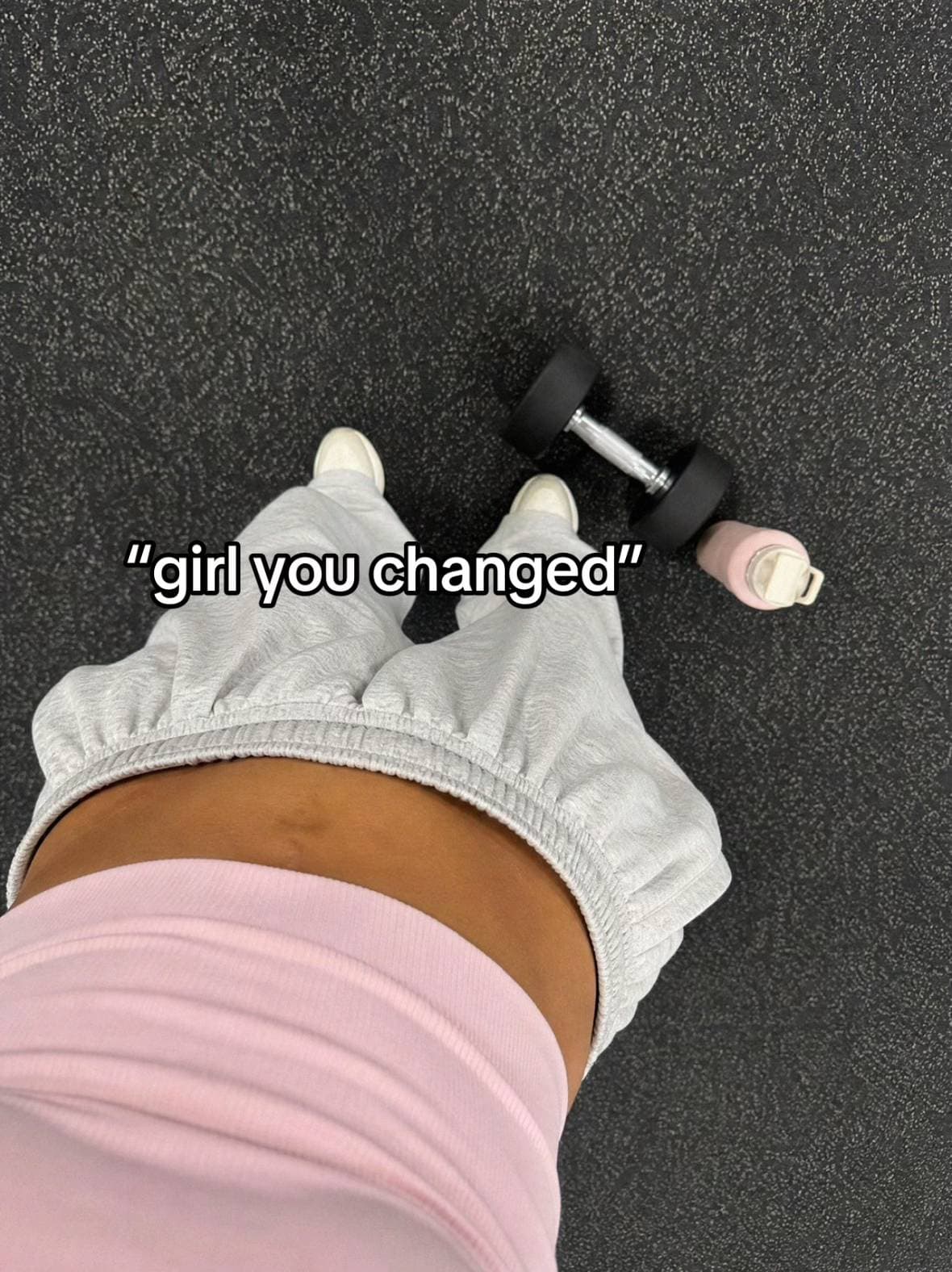
“that’s good news,” close to the creator’s live photo median.
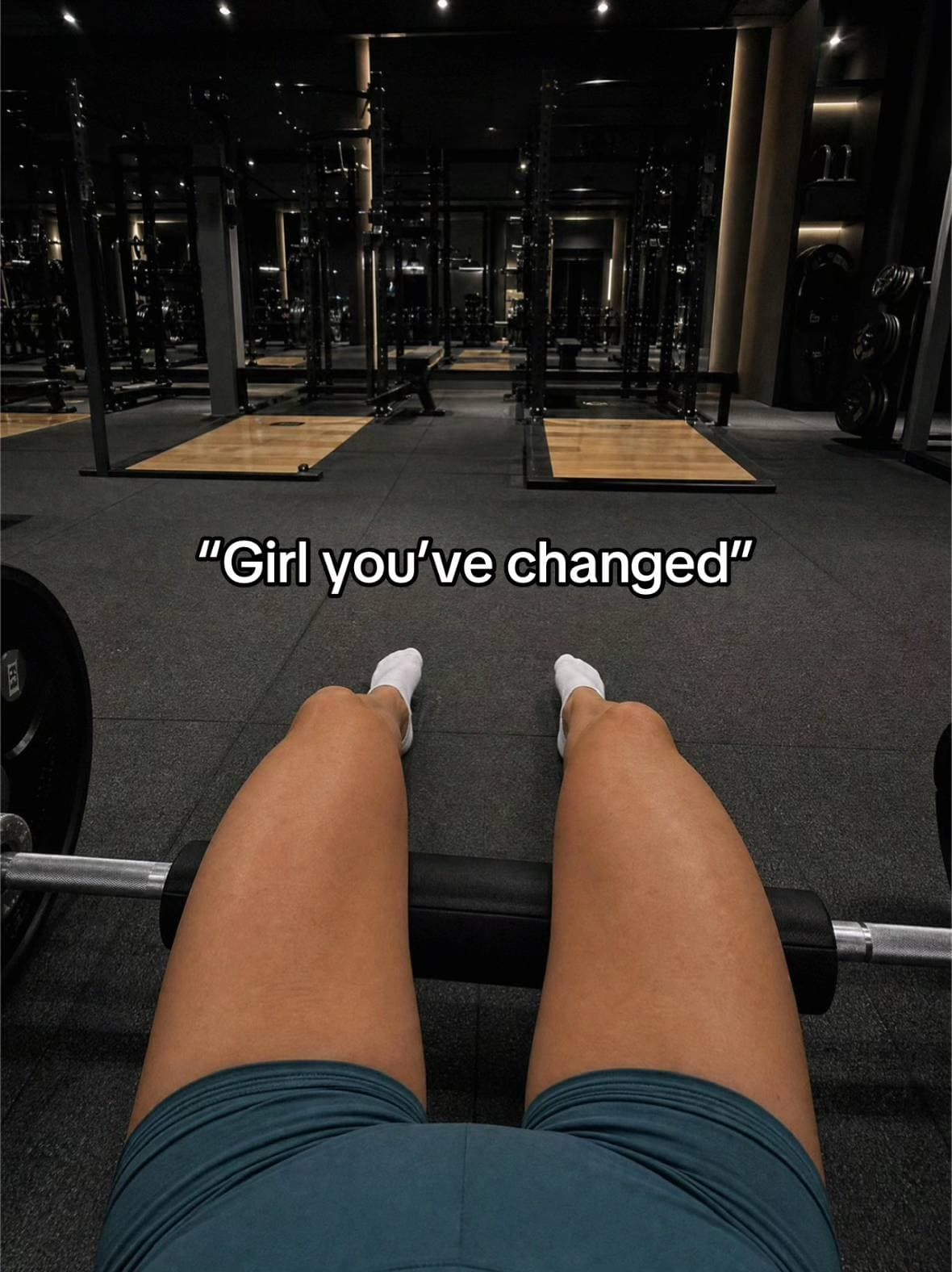
“music to my ears,” another two-slide median-range control.
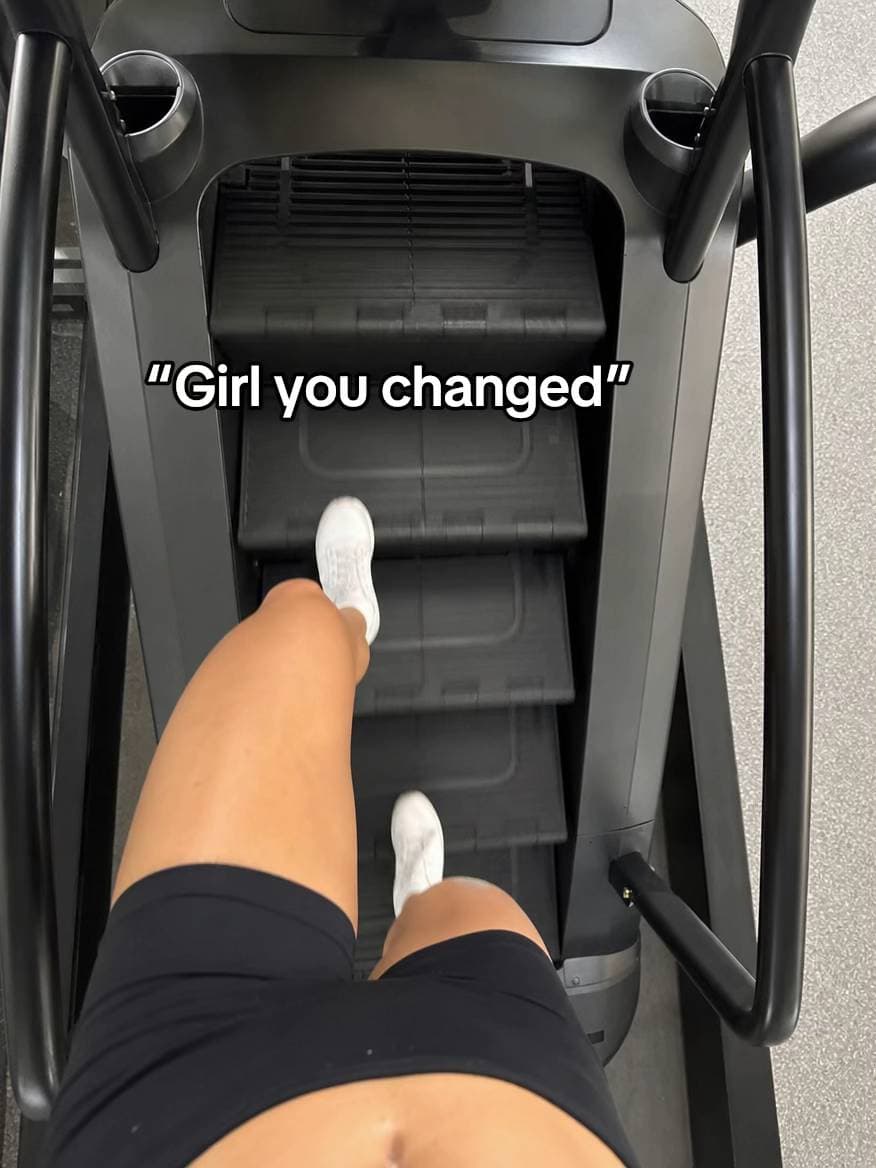
“I got stronger,” a two-slide post just above the median.
The cited result is a creator-relative breakout. Its 8.88 million plays sit far above the latest-feed median of 5,655. The public counters do not include retention, per-slide swipe-through, distribution source, or subscriptions. We can diagnose the visible construction and reject explanations that fail against controls. We cannot assign causality by percentage.
Start with the two beats we actually captured
This is photo mode, so the beat sheet is the slide sequence rather than video timestamps.
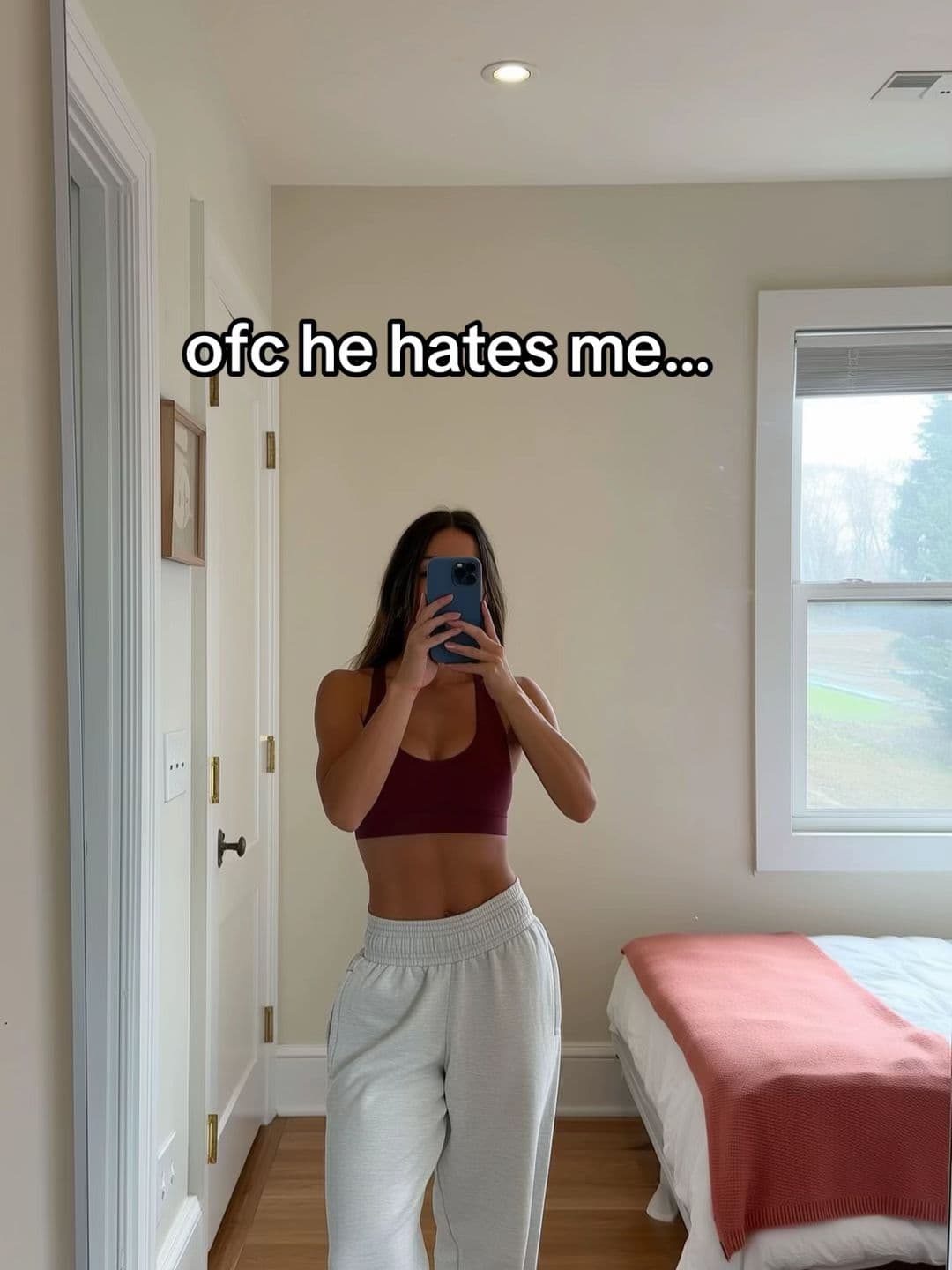
Slide 1 of 2, captured 24 August 2026: a mirror photo with the unfinished line “ofc he hates me...”
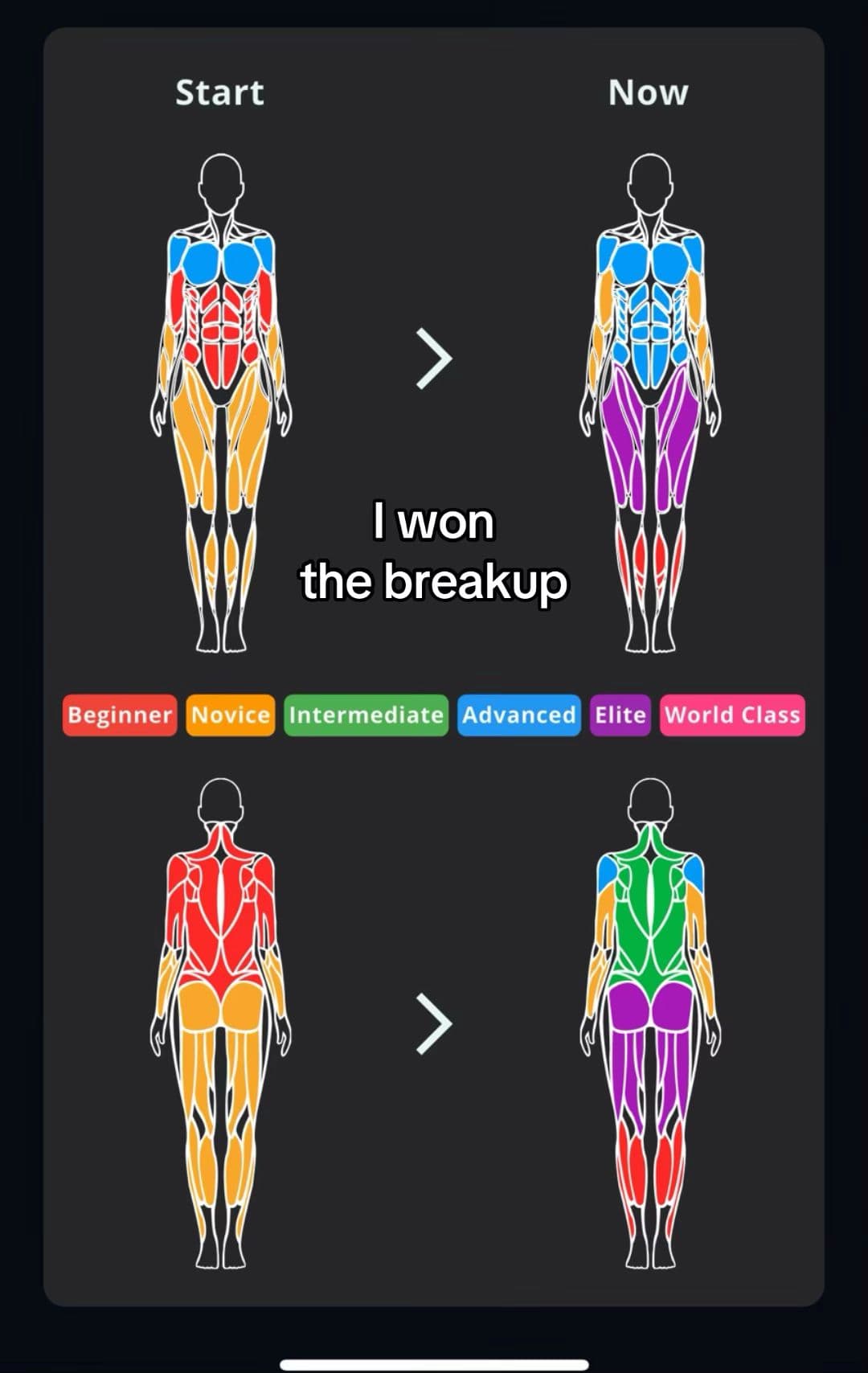
Slide 2 of 2, captured 24 August 2026: “Start” and “Now” muscle maps, colour-coded ratings, and “I won the breakup.”
The first beat shows a person and withholds one reason. The second supplies an answer: visible gym progress reframed as winning after the breakup. Stronger’s muscle map makes that progress legible inside the joke.
Nothing else needs reconstructing. There is no hidden third act, spoken explanation, or product demonstration we have to imagine.
A beat sheet exposes the unsupported jump
The wider explanation can be reduced to five moves:
- Opening claim: a fitness-app slideshow reached a large public result.
- Example reveal: the post uses two images and a relationship setup.
- Proof beat: the play count establishes that this particular post travelled.
- Pattern beat: personal drama turns into a body-progress reversal, with the app as evidence.
- Implied action: repeat the breakup setup and two-slide reveal.
The first four moves describe the sample. The fifth tries to turn that description into an instruction.
That jump is where viral analysis usually gets overconfident. Once a post wins, every visible detail starts looking like it arrived with a causal certificate. The controls let us test three narrower explanations instead.
| Possible cause | What the public evidence supports | What a reader could test |
|---|---|---|
| Opening | The first slide creates a bounded personal question whose answer is one swipe away | Keep slide two fixed and change only the first-slide promise |
| Format | Two slides make setup and reversal immediate, but the same format appears in ordinary and larger posts | Express one idea in two suitable formats without changing its payoff |
| Topic–proof loop | The muscle map answers the breakup setup and gives the app a role in the resolution | Hold the topic stable and vary whether the product genuinely proves the payoff |
Several causes may have worked together. The table separates them because each requires a different test.
Cause 1: the opening makes one swipe feel sufficient
“Ofc he hates me...” withholds information, but it is not vague. The viewer knows who the line concerns, what the emotion is, and what is missing: the reason.
That is a bounded question. “You won’t believe what happened” asks for trust before giving the viewer a subject. This slide provides enough context to form an expectation, then leaves one slot empty.
The format also makes the cost visible. There are only two images. The answer is not buried under a six-part story or a biography of everyone involved. One swipe should settle it.
The wording alone still is not portable. If slide two revealed an unrelated workout dashboard, the post would provide new information without answering the question. Curiosity earns the swipe; continuity earns the payoff.
To test the opening, keep the captured second-slide logic stable: the same progress evidence, the same product role, and a comparable posting context. Write two first slides that promise different reasons to see that exact reveal. Predict the result before publishing. Otherwise a winning version will make its wording look inevitable after the fact.
Cause 2: two slides sharpen the reversal, but do not explain it
The post is almost comically efficient. Setup, swipe, answer. There is no middle slide available to explain the joke until it needs medical attention.
That makes two images a sensible production choice. The live baseline also kills “make it two slides” as a strategy.
All 33 posts returned by the latest creator call were photo posts. Their median was 5,655 plays. The six matched controls shown above all used two images and ranged from 5,449 to 7,166 plays. Same account, same format, results near the middle.
The hot feed provides the opposite counterexample. The “torn in pieces” and “check mate” cards above are also two-image posts. They reached 42,174,967 and 15,450,086 plays respectively, both above the cited post.
Two slides therefore appear at roughly 5,000 plays, 8.88 million, 15.45 million, and 42.17 million within one account. The format can support a clean reversal. It cannot tell us why one execution moved and another stayed ordinary.
The latest call spans October 2025 to August 2026, so this is not a time-matched experiment. Post age and distribution conditions differ. That limitation weakens causal comparisons, but it does not rescue the claim that image count alone made the winner. A feature shared by low and high performers is not sufficient by itself.
Cause 3: the product completes the answer
Slide two does three jobs at once.
First, it resolves the social question. “I won the breakup” explains why the person on slide one can treat being hated as a victory.
Second, it turns that line into something visible. The “Start” and “Now” diagrams show coloured muscle ratings across the body. The viewer can inspect a before-and-after rather than accepting a generic claim that training went well.
Third, it gives Stronger a credible role. This is not an app screenshot stapled to the end after the entertaining part. The product’s representation of progress is part of the punchline.
That creates the topic–proof loop:
- The relationship topic opens a personal question.
- The gym-progress reveal answers it.
- The product makes the claimed progress inspectable.
Break any link and the sequence weakens. Drama followed by an arbitrary dashboard is bait-and-switch. Progress without an opening is another result post. An app screen that proves nothing is an advert waiting for the joke to finish.
This is also the least portable part of the creative. A finance app, meal planner, or calendar cannot borrow “he hates me” and expect the product to belong in the answer. The opening has to create a question that the product can honestly help resolve. Finding that question is the work.
What the public numbers cannot settle
This evidence clears a creator-relative outlier test. It does not clear a causal one.
We do not have per-slide continuation, retention, traffic sources, posting experiments, or subscription conversion. The 36,526-follower profile and 5,655-play photo median give useful account context, but neither reveals what TikTok’s distribution system saw after the post went live.
The engagement counters also answer different questions. Likes, comments, shares, and saves are observable responses. Combining them into one rate would not show which beat caused a swipe or whether someone installed Stronger.
So the honest diagnosis stays narrow:
- The cited post was a large same-creator outlier in the live snapshot.
- Two-slide photo posts from the same creator also produced ordinary results.
- Other two-slide posts from that creator exceeded the cited result.
- The opening, immediate reversal, and product-backed proof fit together plausibly.
- None of those creative causes has been isolated.
That is enough to design a better test. It is not enough to announce a universal breakup-hook formula.
What this case study suggests testing
If you want to test the mechanism on your own content, keep one payoff and change one promise.
Choose a real progress comparison your product can support. Build one second slide where the result and product evidence are inseparable. Then write two first slides that open different, specific questions about that same result.
Keep the image count, second slide, visual treatment, and posting conditions as close as practical. Measure movement to slide two if your account analytics provide it, then completion and higher-intent actions. Compare total plays with the account’s ordinary work, but do not use plays as a substitute for what happened at the swipe.
Write a falsifiable prediction first: “The personal question will earn more continuation than the direct progress claim while the proof slide stays unchanged.” If it loses, you learned about the opening. If both openings earn continuation but the post still dies, inspect whether the reveal actually pays off what they promised.
The parent method, why this video worked, gives the reusable process: define the result, list different possible causes, find controls, and change the smallest variable that can separate them. A later two-slide dating post gets the same treatment in why the datingwithmads 27×-median slideshow worked.
The Stronger post is worth studying because the sequence is tight and the result is a real outlier. Its lesson is not “write about an ex” or “use two slides.” Ask a question the next beat can answer, make the answer visible, and give the product a reason to be inside it.
Keep reading
Diagnosis
TikTok hold rate: when the hook works but viewers leave
Diagnose a weak TikTok hold rate after the hook by checking the promise, pacing, audience fit, and the exact retention metric you are reading.
Diagnosis
Why this CareSkin before-and-after TikTok slideshow worked
A 12.5M CareSkin before-and-after TikTok slideshow mixed an acne glow-up, an app reveal, and product proof. See what the evidence supports.
Diagnosis
Why this Costco snack-list TikTok slideshow worked
A 9.6M Costco snack-list TikTok slideshow put a useful list before the app reveal. See which parts of the app-marketing format are worth testing.