
Diagnosis · Updated 24 August 2026
Why this red-flag relationship TikTok carousel worked
A 15.6M relationship TikTok carousel turned a red-flag claim into a six-slide reversal. See how the contradiction, list, and proof worked together.
The first slide did not merely promise relationship advice. It accused a familiar authority of getting the relationship wrong: these looked like red flags because social media had taught the creator to read them that way.
The next five slides then had a job. Each one had to show a behaviour, the suspicious interpretation, and the more generous interpretation that replaced it. That agreement between opening and evidence is a better explanation for the post than “use a red-flag hook” or “make a six-slide list”.
This is an independent case study of public third-party content, not a reels.chat campaign or customer result. reels.chat did not create or publish the content and has no private campaign analytics for it.
Start with the relationship carousel, not the explainer
The sample is a six-image TikTok photo post published on 11 September 2025. A fresh TikHub hydration on 24 August 2026 recorded 15,646,090 plays, 1,922,222 likes, 5,179 comments, 157,668 shares, and 272,798 saves. Public counters move; these are snapshots, not final totals.
The creator profile and cited post are captured here before we diagnose them.
Nine photo posts from the same creator
The winner is compared with the latest photo-post median. The eight controls sit nearest to or below that median.
Cited breakout
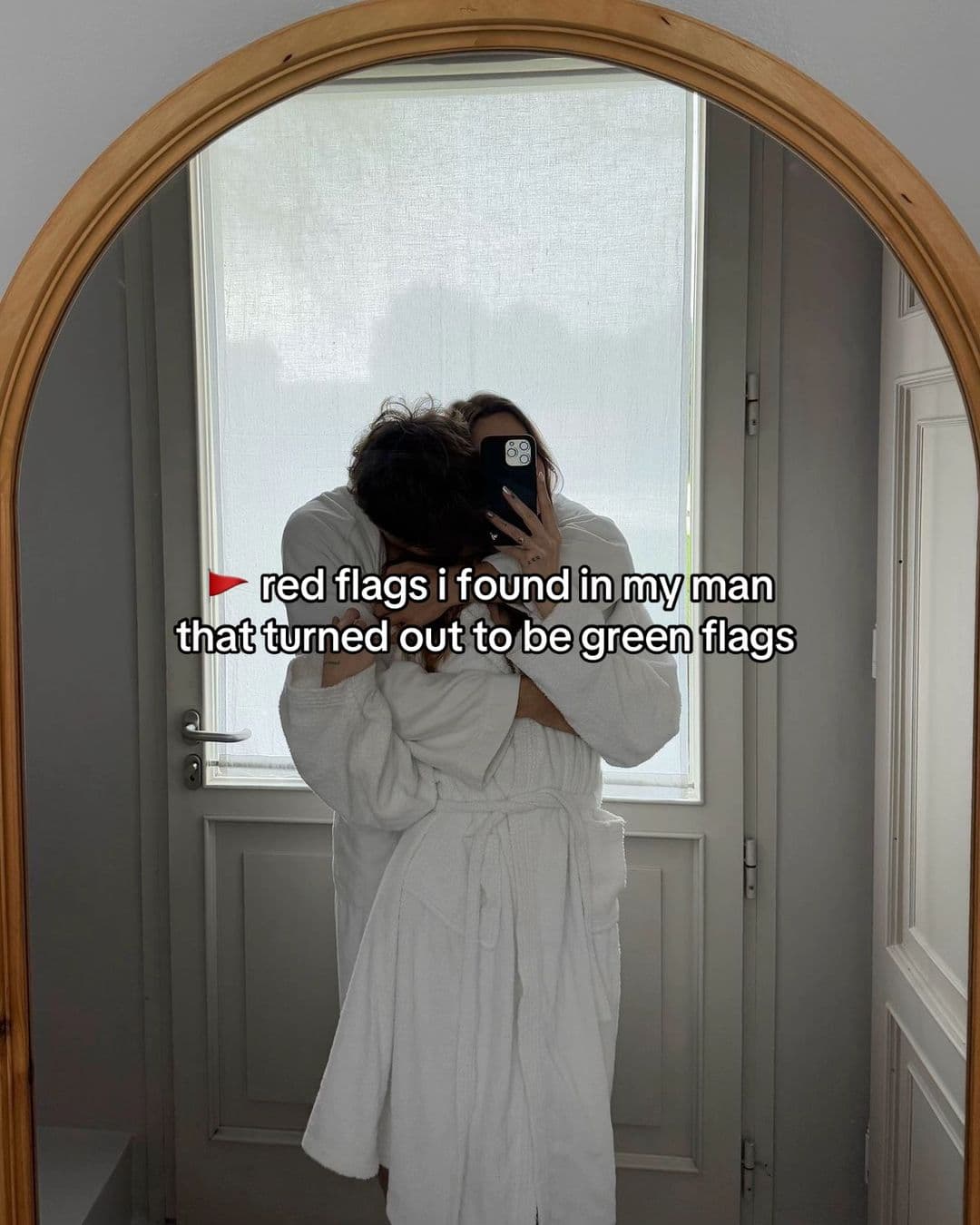

Red flags I found in my man that turned out to be green flags.
Ordinary latest controls

Crediting Coffee Meets Bagel at my wedding.

The relief of no longer pretending to be go with the flow.

Couldn’t have asked for a better partner.
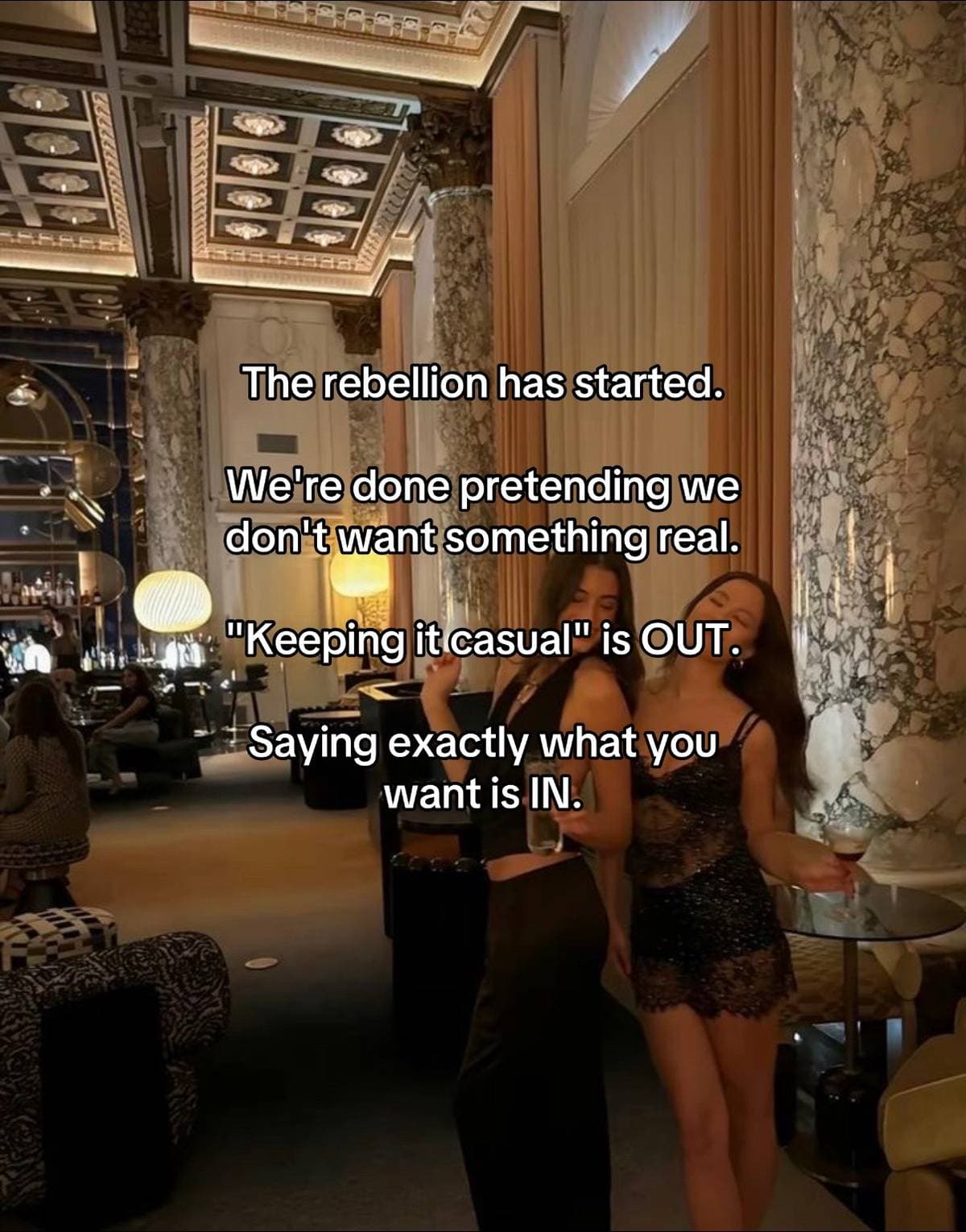
Coffee Meets Bagel is giving intentional energy.

Good things are worth the wait.

Found a fine man with even finer taste.

Men who plan dates ahead of time.

Coffee Meets Bagel is the most underrated dating app.
The creator feed gives us a much harder fact than the viral number alone. Its latest photo-post window contained 31 posts, including the cited post, with a median of 1,056 plays. The cited post was 14,816 times that median.
That ratio needs a warning label. The winner was pinned into a current feed whose other posts were published months later, so this is not a date-matched experiment. It still establishes that the post is an enormous account-relative outlier. The hot feed also returned other successful relationship slideshows between 215,272 and 1,269,707 plays. This account has more than one hit. None in that returned set was close to 15.6 million.
Eight ordinary latest controls ranged from 927 to 1,056 plays. They covered partner praise, boundaries, waiting, dating apps, and intentional dating in three to 12 images. So relationship subject matter, positive sentiment, and a photo carousel all appeared without automatically producing distribution.
One X explainer led us to the sample. One X explainer is not prevalence.
The beat sheet
Before calling anything a framework, reduce the argument to its moves:
- Opening claim: supposed red flags can turn out to be evidence that someone is a keeper.
- Example: one relationship slideshow supplies five behaviours.
- Proof structure: each behaviour gets an old reading and a new reading.
- Closing edge: jealousy and trust leave viewers with a boundary they can debate.
- Implied action: copy the contradiction and list format into another carousel.
The first four beats describe what is visible. Beat five is where description quietly becomes advice.
The public evidence does not isolate a cause. We do not have swipe completion, retention, traffic sources, or an alternate version where only the opening changed. What we can do is separate three entangled layers, test each against the captured slides, and use the controls to kill the laziest explanations.
| Possible cause | What the public evidence supports | What a reader could test |
|---|---|---|
| Opening | The first slide creates a specific reversal, while ordinary relationship posts did not automatically travel | Keep the paired examples fixed; compare a neutral list opening with the contradiction |
| Format | Six stills carry five old-reading/new-reading pairs, but photo mode and similar slide counts also appeared in ordinary controls | Keep the argument stable; compare photo mode with another suitable format |
| Topic–proof loop | Every example must support both the suspicious and generous reading promised by slide one | Keep the opening; compare tightly paired evidence with a loose relationship-advice list |
Cause 1: the opening created a proof debt
Slide one says: “red flags i found in my man that turned out to be green flags”. The couple photo makes the claim personal, while “red flags” imports a category viewers already know from relationship content.
The useful move is the reversal. “Green flags in my boyfriend” could introduce any collection of nice qualities. “Things I misread as red flags” creates a stricter contract. Every later item must first look plausibly worrying, then survive a second reading.
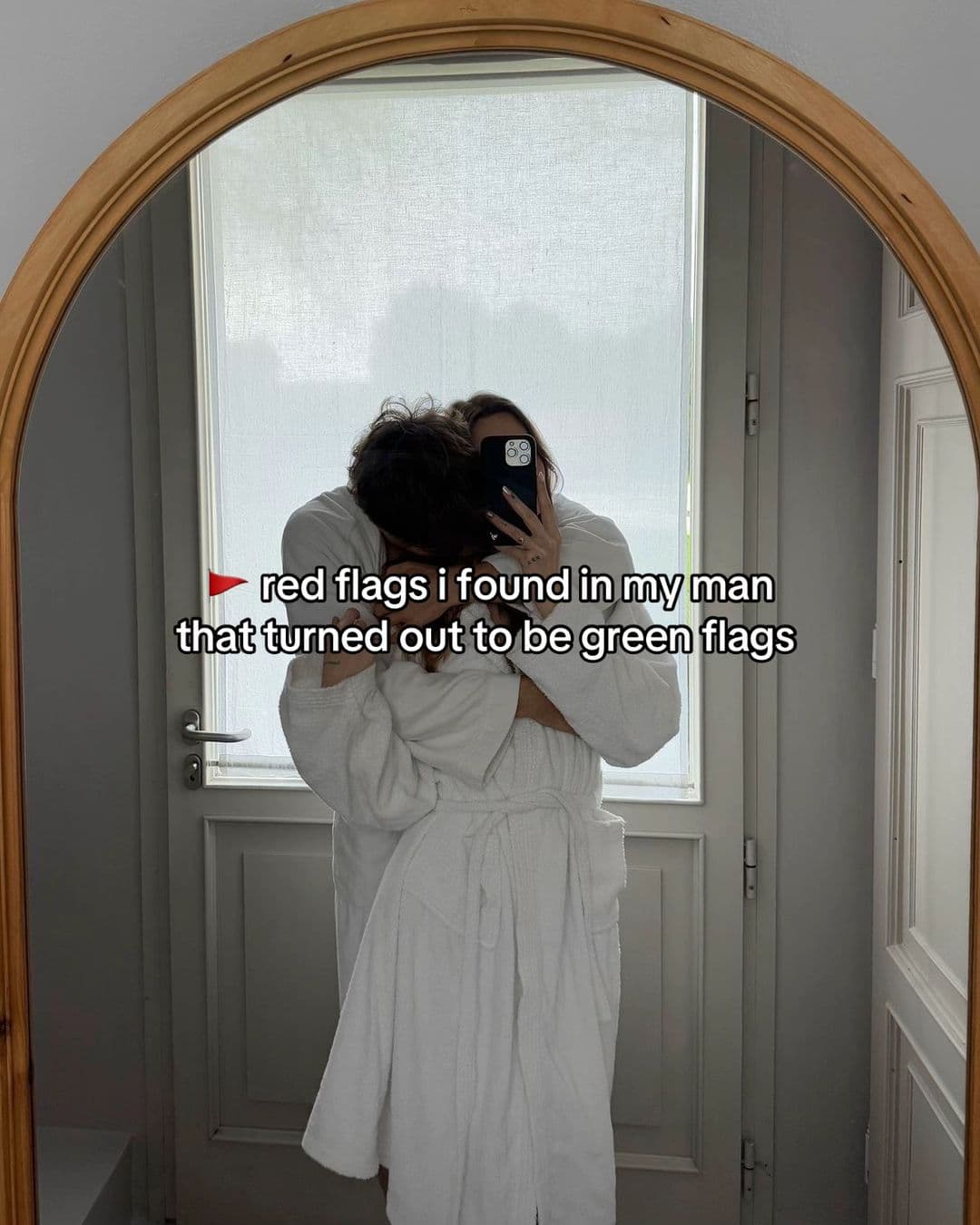
Slide 1 of 6, captured from the TikTok photo-mode CDN on 24 August 2026. The opening names the old category and promises a reversal.
That promise generates several reasons to swipe. A viewer who agrees wants the examples. A viewer who distrusts social-media dating rules wants the vindication. A viewer who still thinks these behaviours are warning signs wants to inspect the defence.
This is not generic curiosity. The question is bounded: which five behaviours changed meaning, and why?
How to test the opening
Keep the five behaviours, images, order, and final slide stable. Test a neutral first slide such as “five things I value in my relationship” against a contradiction such as “five warning signs I was reading wrong”.
If the contradiction version repeatedly improves continuation while the body remains close, the opening deserves more credit. Changing the title, examples, photography, and number of slides at once creates several new posts and one very confident story about them.
Cause 2: the list format carried paired arguments
Slides two through five use the same compact grammar:
- a numbered behaviour;
- “I thought”, followed by the suspicious interpretation;
- “I realized”, followed by the replacement interpretation.
That repetition matters more than the number six. The viewer learns how to read the sequence on slide two. Slides three, four, and five can then spend their space on the next case instead of explaining the format again.
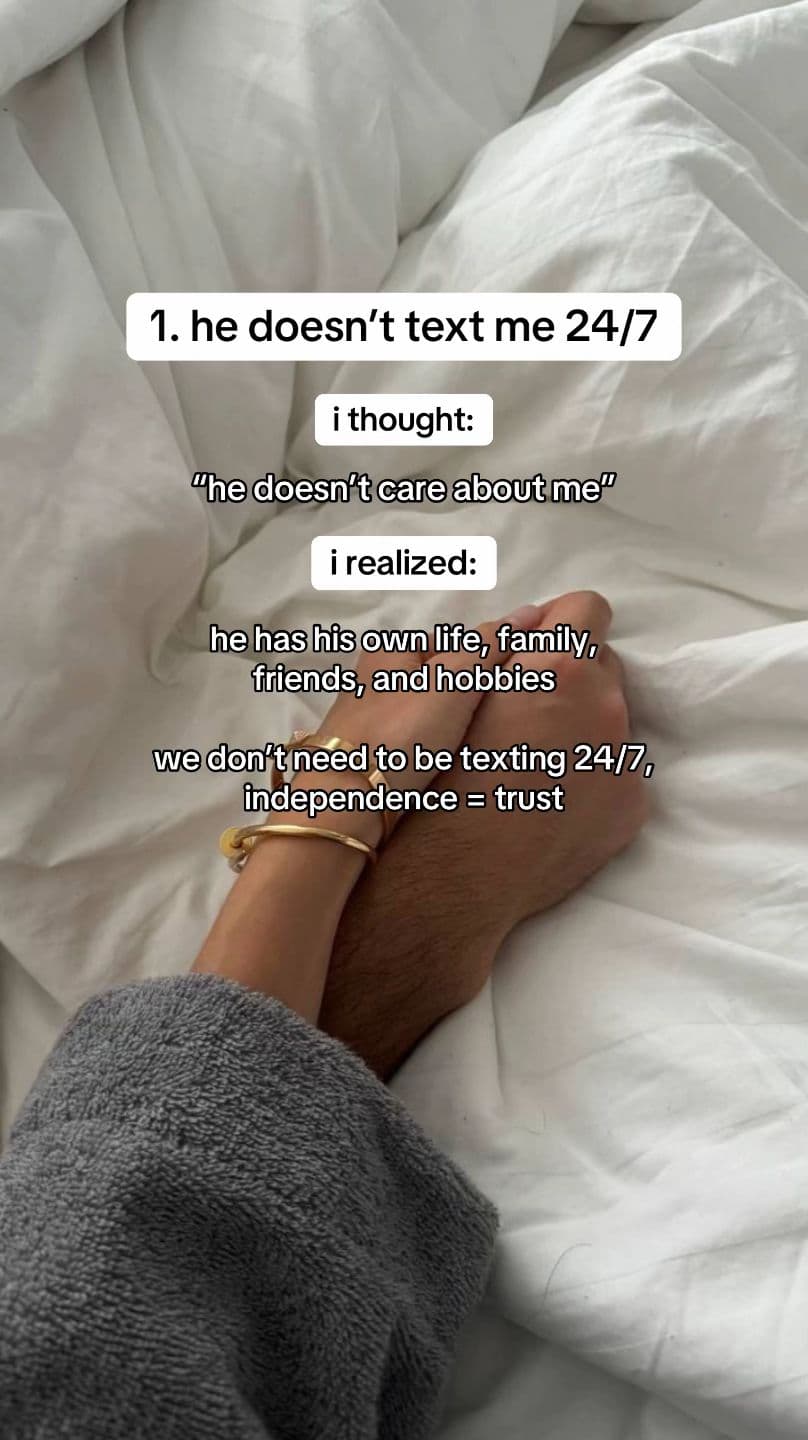

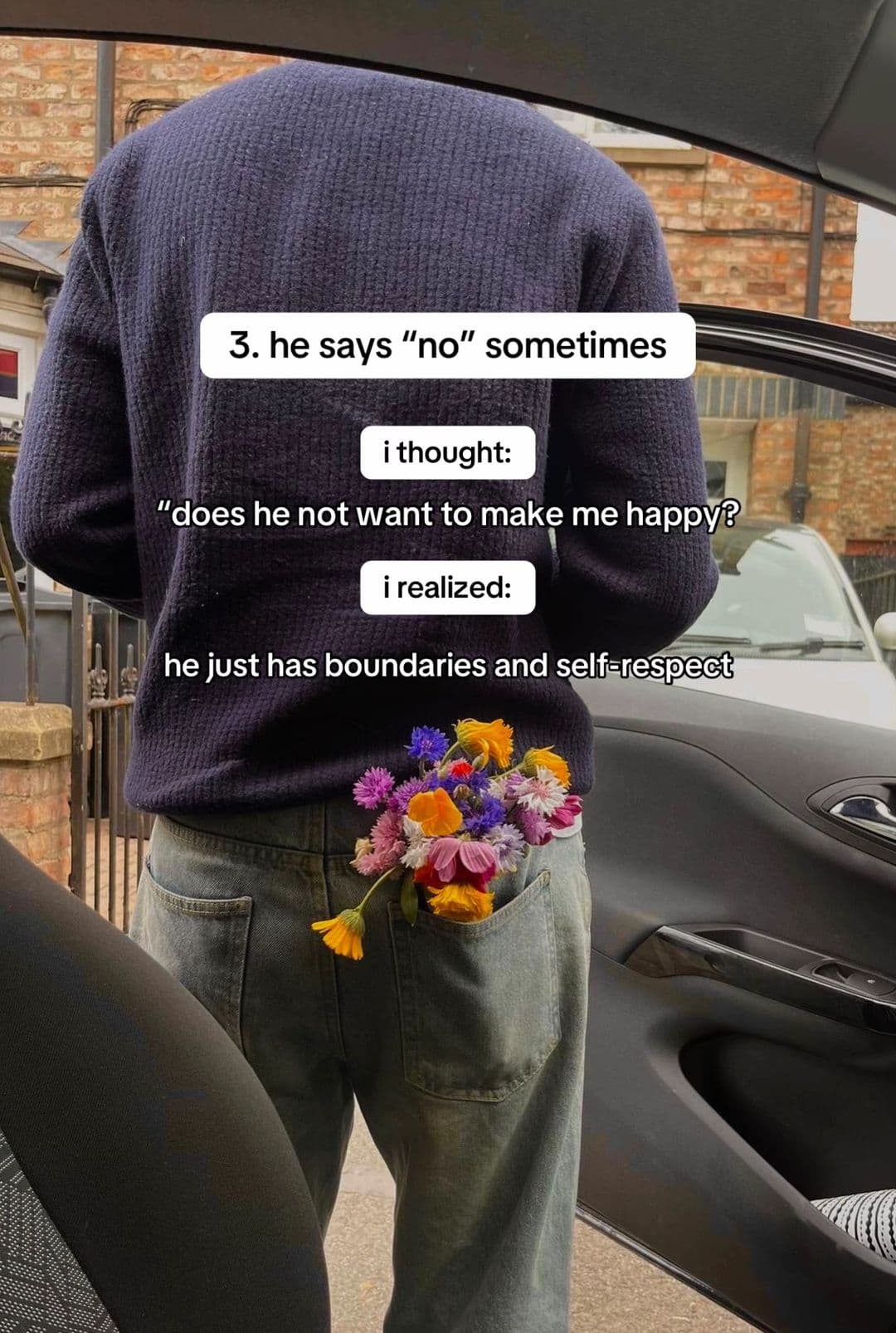
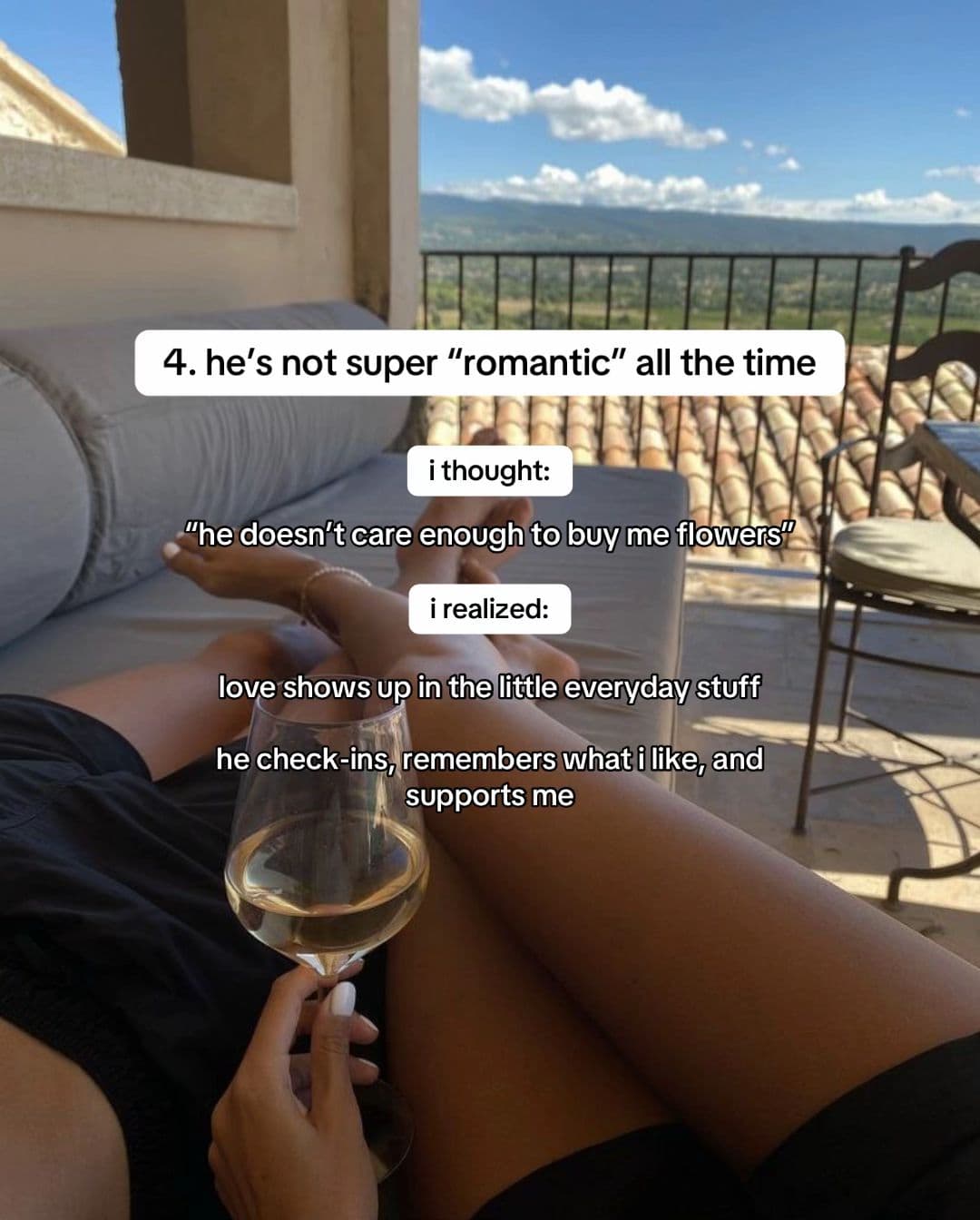
Slides 2–5, captured on 24 August 2026. Every middle slide repeats behaviour → suspicious reading → revised reading.
The format gives the argument four clean exhibits. It also makes the post easy to pause on and revisit. The 272,798-save snapshot makes reference value worth investigating, but it does not prove that six images caused the saves.
The controls make “use a slideshow” especially weak advice. Every post in the latest window was photo mode. The selected ordinary set included six- and eight-slide relationship posts near 1,000 plays, plus a 12-slide post at 945. More slides did not purchase more reach.
How to test the format
Take the same five misread behaviours and make them twice: once as paired text on still images, once as another format with the same sequence. Keep the opening claim close. Compare against the creator’s own baseline, not a random talking-head account with a different audience.
Cause 3: each slide proved the title
The middle sequence is unusually disciplined.
Not texting constantly can be read as indifference or independence. Calling someone out can be read as criticism or accountability. Saying no can be read as withholding or self-respect. Missing conventional romance can be read as low effort or as care expressed in smaller daily actions.
These examples are not interchangeable “green flags”. Each contains the two readings required by slide one. Remove the old interpretation and the post becomes a pleasant relationship list. Remove the revised interpretation and it becomes a warning list. The pair is the material.
The opening therefore creates a proof debt. Each swipe pays part of it.
That gives you a useful draft review:
- Name the exact behaviour.
- Write the common negative reading.
- State what observable context changed that reading.
- Check that the example proves the opening rather than merely fitting “relationships”.
If an item only says “he supports me”, it may be true but it does not prove that a red flag was misclassified. The body has stopped answering its own title.
The last slide completes the reversal before it invites debate
The pool slide is sometimes described as a comment prompt because jealousy is easy to argue about. That may have helped comments. The direct snapshot had 5,179; the creator-feed copy in the same research run showed 5,191.
But the slide does not ask an explicit question. It says that not getting jealous once looked like lack of care, then reframes it as trust. The debate comes from the claim itself. Viewers can disagree about where trust ends and indifference begins without being handed “what do you think?”.

Slide 6 of 6, captured on 24 August 2026. The closer preserves the same two-reading structure and leaves the most debatable behaviour until last.
This corrects an attractive but unsupported hook-list claim. The closer is not a separate piece of comment bait pasted onto a list. It is the final and most contestable example of the same argument.
What the controls falsify
The investigation does not prove a universal mechanism, but it rules out several easy ones:
- Relationship content was not sufficient. Ordinary controls covered dating, partners, standards, and intentional dating.
- Photo mode was not sufficient. All 31 posts in the latest returned window were photo posts.
- Six images were not sufficient. Ordinary six-slide controls sat around 939–1,041 plays.
- Positive partner language was not sufficient. An eight-slide partner-praise control had 998 plays.
- This was not the account’s only hit. The hot list contained several posts above 1 million, yet the cited post was still more than 12 times the next-highest result returned.
The evidence supports a creator-relative outlier diagnosis: captured creative, current public metrics, and a same-creator baseline. It does not support a causal claim because private retention and controlled variants are absent.
What this case study suggests testing
If you want to test the mechanism on your own content, keep the topic narrow: behaviours that can honestly support two interpretations. Then build one body where every slide follows the same old-reading/new-reading structure.
Write two openings for that body. One states the positive list plainly. The other names the mistaken category and promises a reversal. Keep the format, order, and closer as stable as practical.
Compare both with ordinary posts from the same account. Watch continuation and saves if you own the analytics; use public plays only as an outside observer. Repeat before calling the result a law.
If the contradiction wins while the body stays fixed, keep testing the opening. If both openings behave similarly but tightly paired examples beat loose advice lists, the topic–proof loop deserves more credit. If the same argument travels better in photo mode than another format, then the container has earned a claim too.
The portable idea is not “red flags that are green flags”. It is a real interpretive dispute, unfolded through evidence that can support both readings. Slide one opens the case. Every slide after it has to show up with an exhibit.
For the full diagnostic process, use why this video worked: define the symptom, list materially different causes, find the evidence that would distinguish them, then change the smallest useful variable. A 2023 advice list with a similar “formula” problem is in why the dark-psychology list slideshow worked.
Keep reading
Diagnosis
TikTok hold rate: when the hook works but viewers leave
Diagnose a weak TikTok hold rate after the hook by checking the promise, pacing, audience fit, and the exact retention metric you are reading.
Diagnosis
Why this CareSkin before-and-after TikTok slideshow worked
A 12.5M CareSkin before-and-after TikTok slideshow mixed an acne glow-up, an app reveal, and product proof. See what the evidence supports.
Diagnosis
Why this Costco snack-list TikTok slideshow worked
A 9.6M Costco snack-list TikTok slideshow put a useful list before the app reveal. See which parts of the app-marketing format are worth testing.