Diagnosis · Updated 24 August 2026
Why this couple-photo TikTok carousel worked
A 10.4M couple-photo TikTok carousel turned pose inspiration into a five-swipe proof loop. See what made the format useful and repeatable.
The couple photo-trick slideshow was a real creator-relative outlier: 10,417,931 plays against a 2,087-play median for 34 photo posts in the creator feed we checked. But the evidence does not say that a hidden face, hand comparison, or phone trick caused the result.
The stronger diagnosis is narrower. The first slide names a useful job, the photo format makes the examples easy to keep, and all five slides fulfil the same promise. Same-creator controls show why copying the visible poses is not enough.
This is an independent case study of public third-party content, not a reels.chat campaign or customer result. reels.chat did not create or publish the content and has no private campaign analytics for it.
The result is real. The formula is not.
An X explainer supplied the hypothesis: this was a “soft launch cheat code” built from five easy couple-photo ideas. It is a good prompt for an investigation. One X post is not evidence that the formula works across TikTok.
We hydrated the underlying photo post through TikHub App V3 on 24 August 2026, downloaded all five slides, resolved the profile, and fetched the creator’s latest and hot feeds. The direct snapshot recorded 10,417,931 plays, 1,789,003 likes, 2,219 comments, 109,576 shares, and 580,318 saves.
The account had 5,867 followers at capture time.
The latest request returned 36 posts dated 26 July 2025–24 January 2026. Thirty-four were photo posts. Their median was 2,087 plays, with the cited winner included in the window. That makes the winner 4,991.82 times the photo-post median.
Seven photo posts, one creator, one large separation
Public counters captured on 24 August 2026. Open each TikTok card for its complete sequence.
Cited breakout
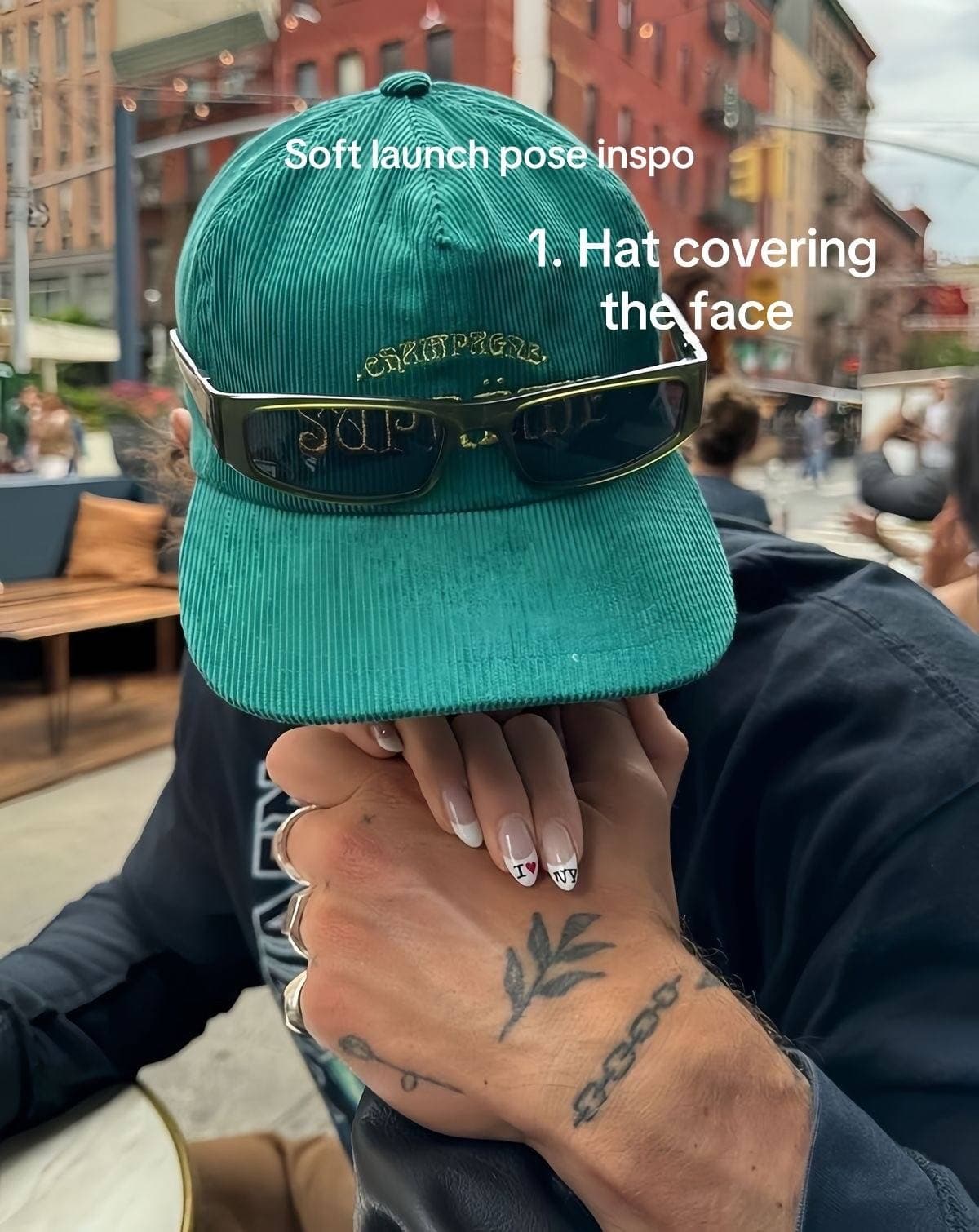

Five soft-launch pose examples, from a face-covering cap to a phone-screen portrait.
Ordinary same-creator controls
My love language is physical touch: another five-slide couple-pose post.

So when should I hard launch him?

Soft launches were so yesterday: four couple-pose slides with an ordinary result.

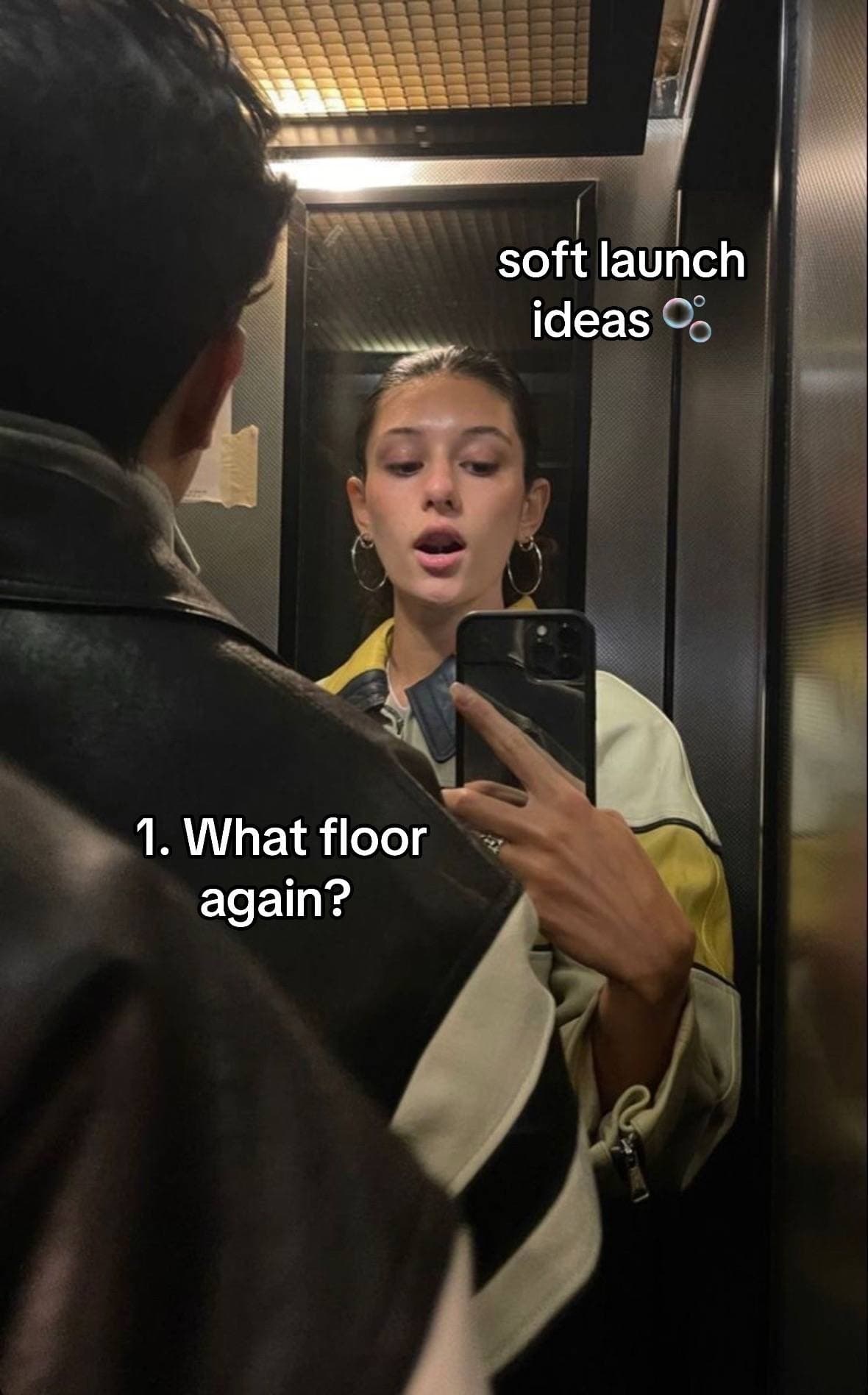
Quick snap is the way to go: three mirror-photo examples from the same account.
Everyone seems to be cuffed this season: the same seasonal framing, four slides.
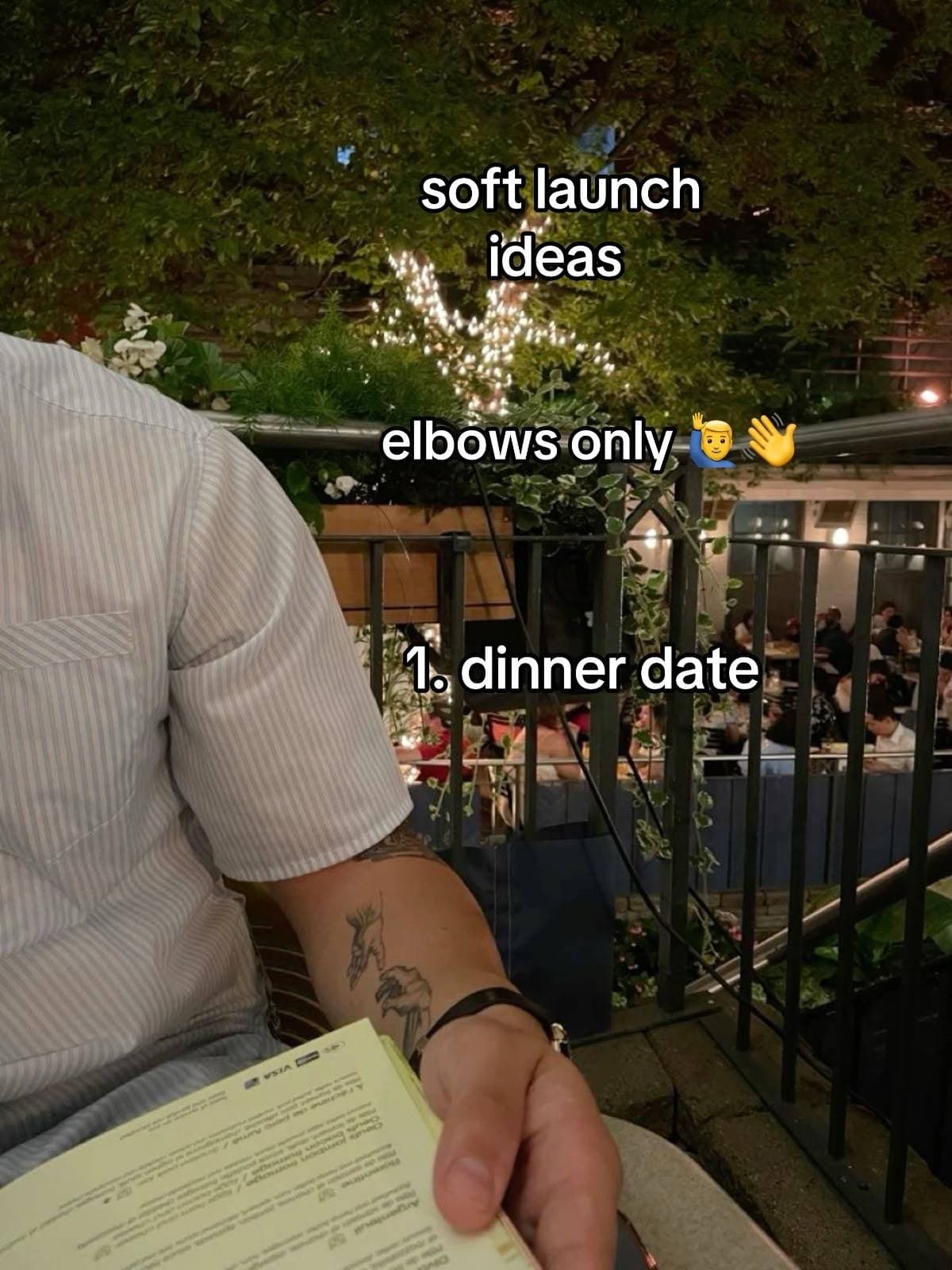
No face is always my favorite: a faceless soft-launch post that stayed ordinary.
The ratio establishes an outlier. It does not allocate credit. Public counters contain no swipe completion, retention curve, traffic history, or experiment where one pose changed and everything else stayed fixed.
The hot feed adds useful context. The cited post ranked first in the 25 returned results, but the next two had 2,864,906 and 1,808,470 plays. This account produced several large five-slide soft-launch posts. The winner was not a lone miracle, and a five-slide post was still far from a guaranteed result.
What the five-slide TikTok carousel actually does
Photo posts have slide beats, not video timestamps. Here is the complete sequence captured from TikTok’s photo-mode CDN on 24 August 2026.
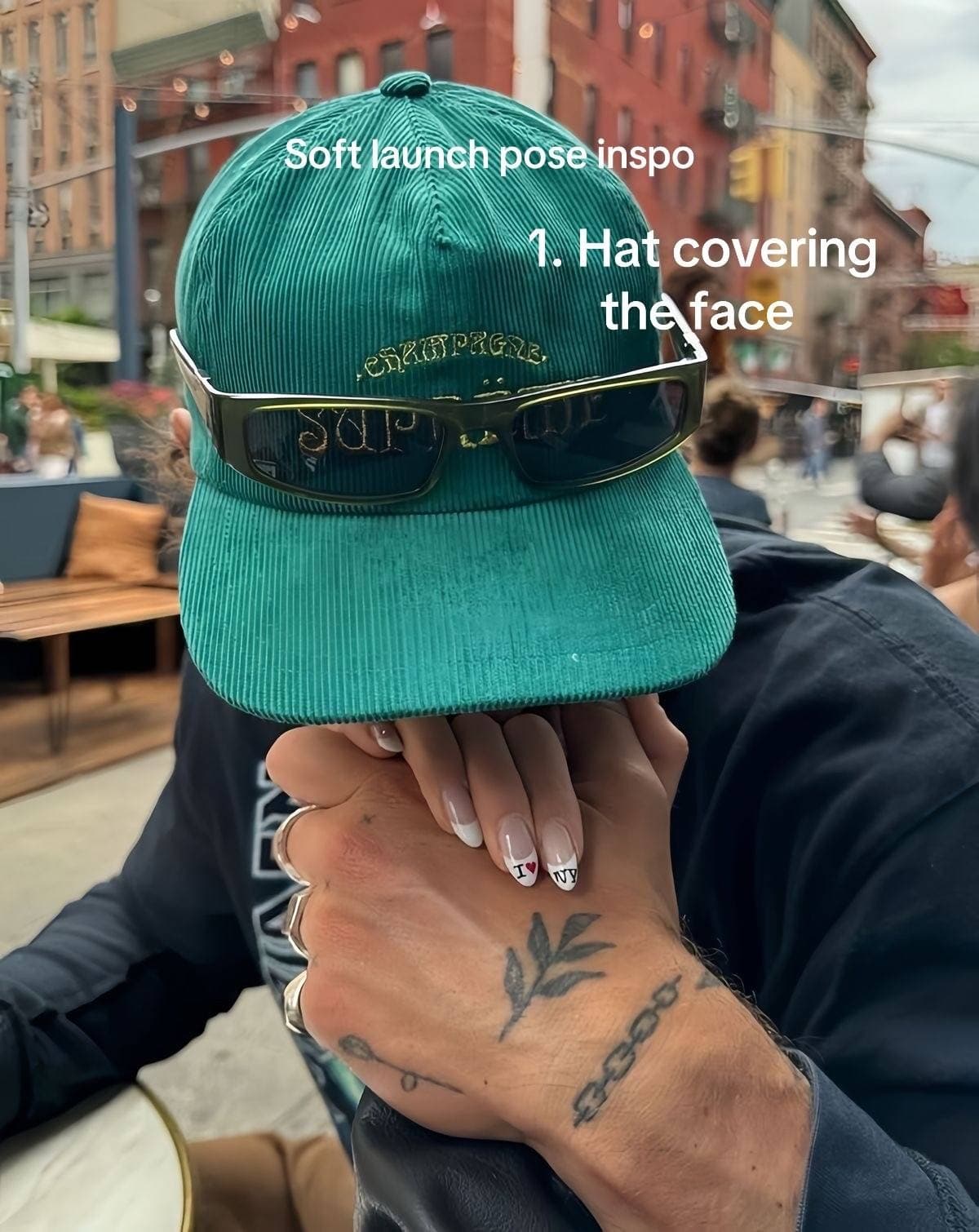
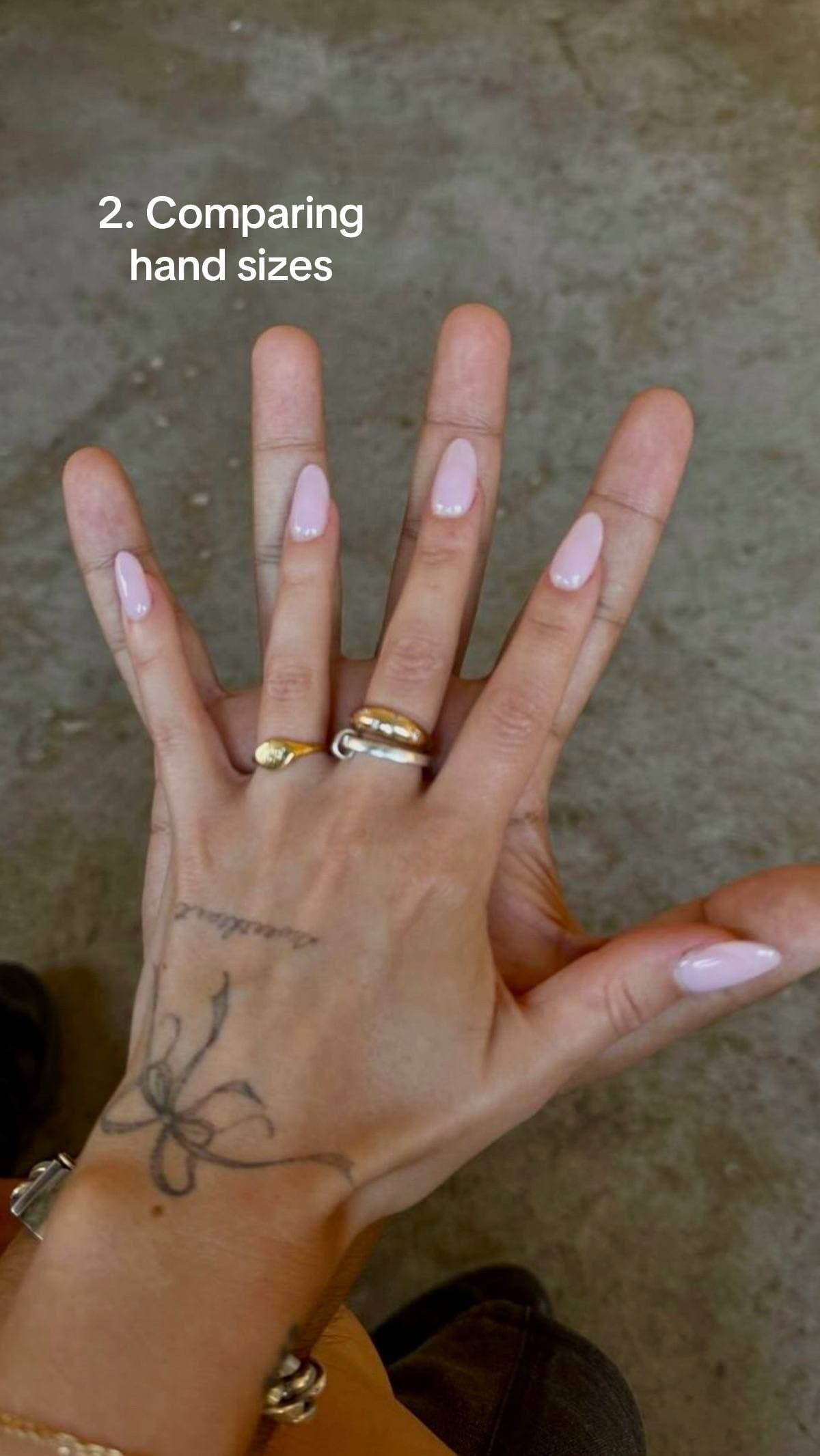

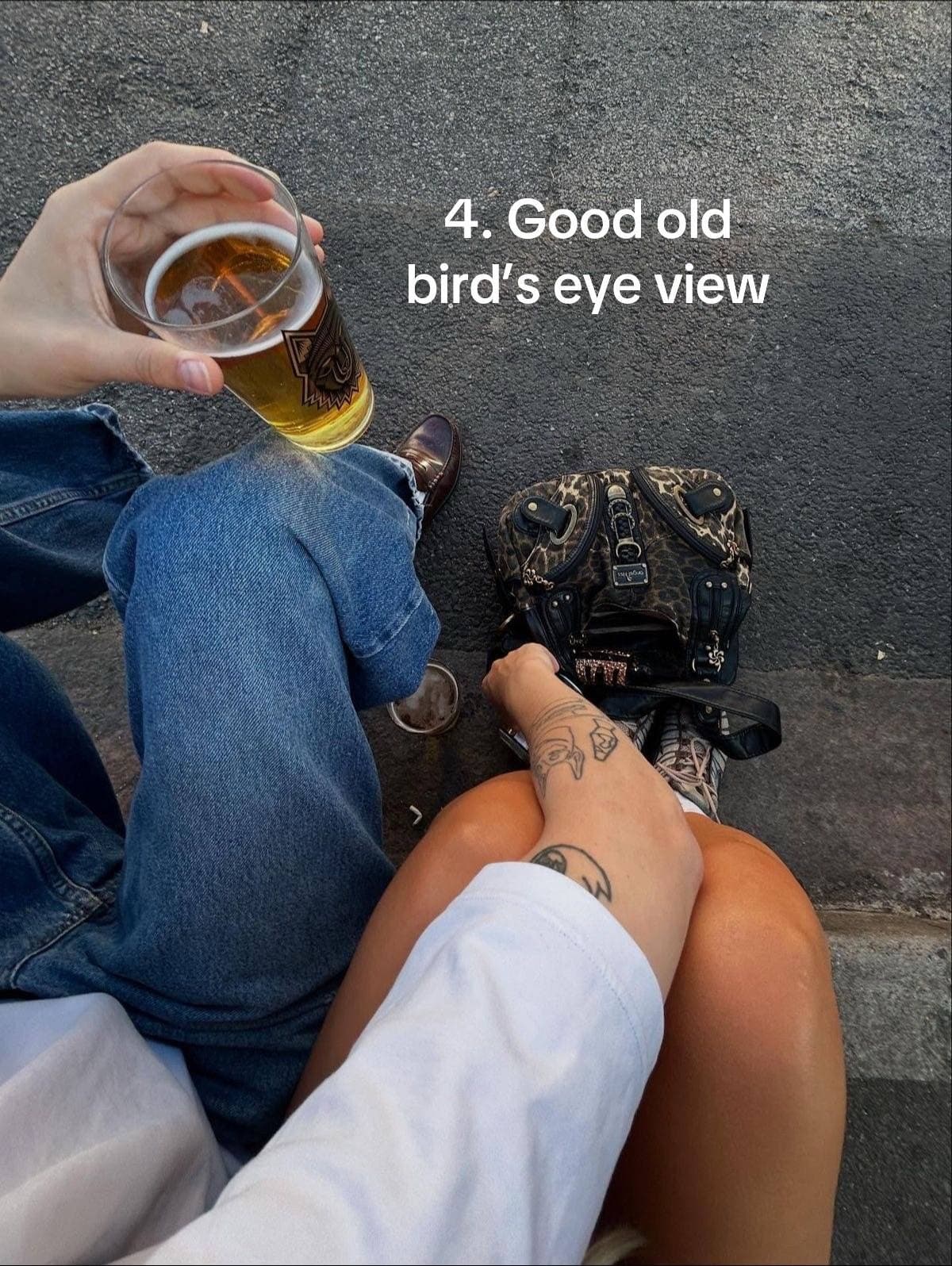
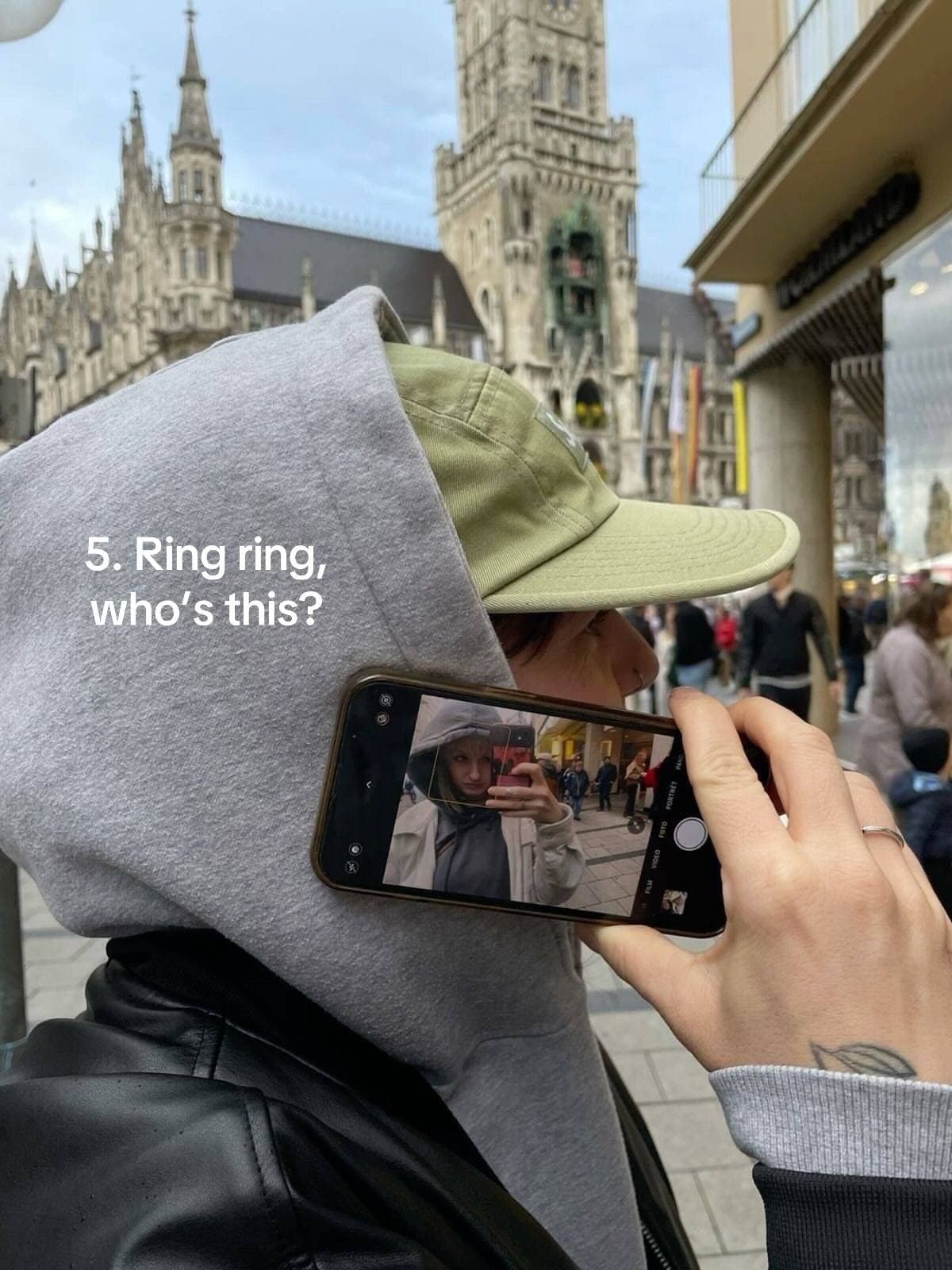
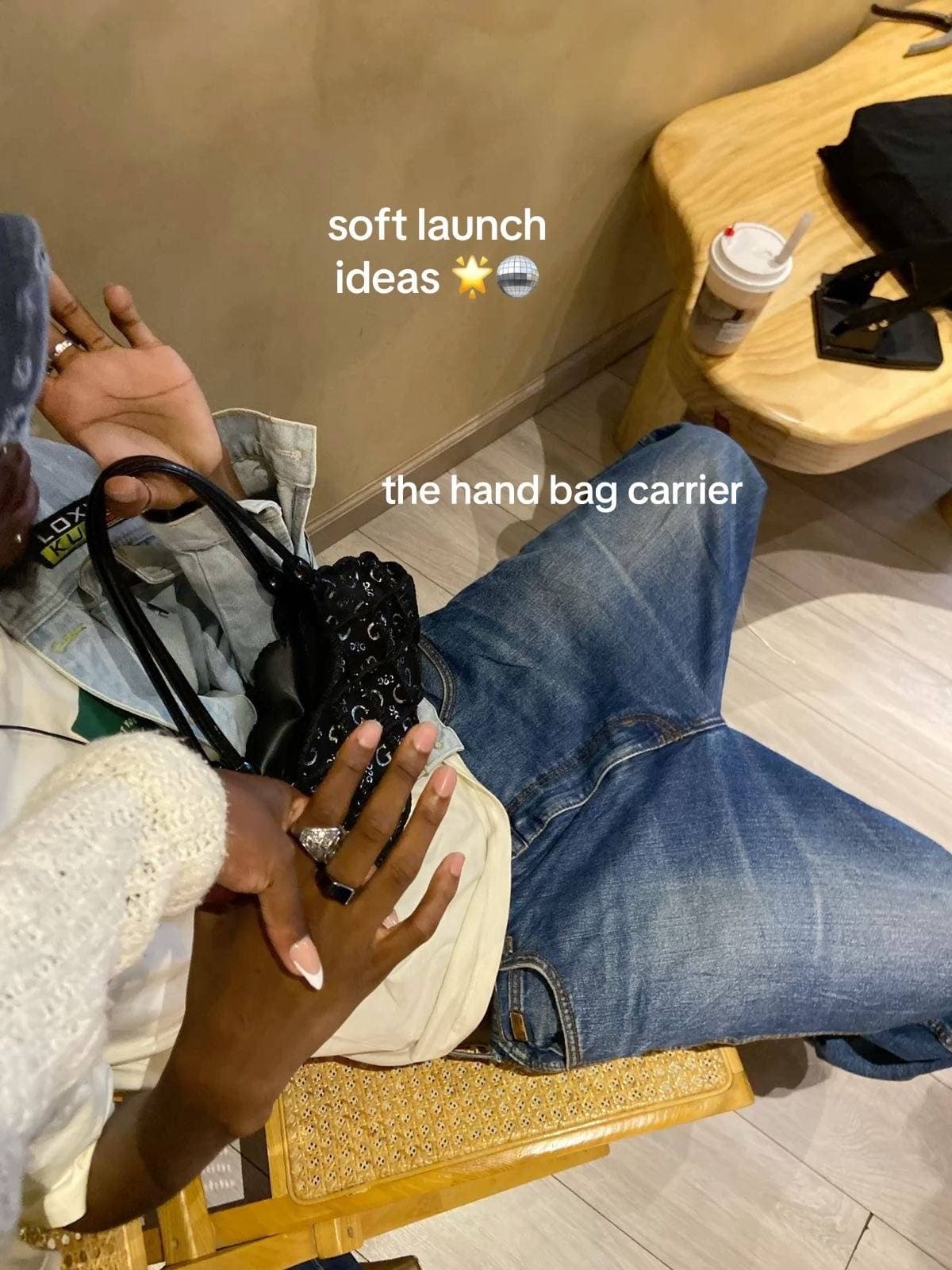
All five slides captured on 24 August 2026. The beats move from a face-covering cap to hands, a car moment, a top-down drink shot, and a phone-screen portrait. Each image labels the pose it demonstrates.
The sequence is more explicit than a mood board:
- Name the job. “Soft launch pose inspo” tells the viewer what the collection is for before the first swipe.
- Give the easiest example first. A cap covers the face while the joined hands still establish a couple.
- Reduce the setup. Comparing hand sizes needs almost no location, wardrobe, or prop.
- Add a scene. Holding hands at a red light turns an ordinary car moment into another shot to copy.
- Widen the setting. The overhead drink photo demonstrates composition rather than a relationship story.
- Finish with the trick. The phone screen creates a picture inside the picture while remaining a usable pose example.
That final beat is novel, but it does not rescue unrelated material. It works inside the collection because it answers the same request as slide one.
Separate opening, format, and topic–proof loop
These causes can work together, but each requires a different test.
| Possible cause | What the public evidence supports | What a reader could test |
|---|---|---|
| Opening | Slide one states “soft launch pose inspo” and shows the relationship without showing a face | Compare the same remaining sequence with materially different first slides |
| Format | Five still images let viewers inspect five compositions; the post had 580,318 public saves | Compare the same promise and examples in photo mode and another format |
| Topic–proof loop | Every slide labels and demonstrates another couple-photo idea | Compare a consistent five-slide sequence with one that drifts away from the opening promise |
Several things changed between the winner and every control, so none of these has been isolated. The table is a test plan, not a causal verdict wearing spectacles.
Cause 1: the opening sells a use, not just a mystery
“Hat covering the face” may stop attention, but the more important text sits above it: “Soft launch pose inspo.” The slide identifies an audience, a social situation, and a practical outcome. Someone can understand the collection without knowing either person.
The seasonal caption, “Since it’s almost cuffing season,” gives that utility a moment. It turns evergreen pose inspiration into something to use soon.
The ordinary controls kill the lazy conclusion that facelessness or cuffing language was sufficient. One four-slide control literally said “No face is always my favorite” and had 1,761 plays. Another said “Everyone seems to be cuffed this season” and had 2,404. A five-slide “So when should I hard launch him?” post had 1,969.
Those are not controlled replicas. Their dates, images, and sequences differ. They are still strong counterexamples to “hide a face and mention cuffing season.” The visible ingredients travelled. The result did not.
To test the opening, keep slides two through five fixed. Change only slide one: one version names the useful collection immediately, while the other opens on an attractive couple image without the explicit job. Compare first-swipe behaviour and completion, then check whether any early advantage survives into saves.
Cause 2: photo mode fits reference material
Pose inspiration asks viewers to inspect a frame, send it to someone, save it, and recreate it later. A still-image sequence accommodates that behaviour without forcing anyone to pause a moving clip at exactly the right moment.
The public save count fits a reference use case. The direct snapshot had 580,318 saves, equal to about 5.57% of plays. Shares were about 1.05%. Those actions do not tell us why each person tapped, but they are more informative here than views alone.
Format did not manufacture the outcome. The six ordinary controls had three to five slides and sat between 1,761 and 2,404 plays. One was another five-slide “love language” collection. Photo mode provided a useful container; dozens of posts used the container without reaching the same distribution.
A clean format test keeps the subject and examples close. Build one photo post and one short video from the same five ideas. Judge the result against the job. If people are meant to keep the examples, saves and shares deserve attention alongside reach.
Cause 3: each swipe proves the opening again
The opening promises soft-launch poses. Slide two does not start explaining relationships. Slide three does not insert a product. Slide four does not tell the creator’s backstory. Each swipe supplies a different composition that belongs in the same saved collection.
That is the topic–proof loop: the topic creates a reason to continue, and each beat provides fresh evidence that continuing was worthwhile.
The phone-screen ending matters because it adds variation without changing the contract. It is more visually involved than comparing hands, so it feels like progression. Yet it remains another photo someone could attempt. Calling it a “trick” is fair. Calling the trick the cause of 10.4 million plays is not.
The fastest pre-publish check is painfully simple. Write the first-slide promise above the storyboard. Under every later slide, finish this sentence: “This earns the next swipe because…” If the answer changes subjects, the post has wandered. If three answers are identical, the collection may have too little progression.
The controls also expose a timing problem
The creator feed spans six months, and the large results are concentrated earlier in the returned window. The cited post was published on 26 July 2025. Two other five-slide autumn or cuffing posts in the same feed reached 2.86 million and 1.81 million plays. By November and December, many posts using the same couple, soft-launch, pose, and cuffing vocabulary were landing in the low thousands.
That does not prove the idea “wore out.” The posts changed, the audience may have changed, and we do not have distribution histories. It does mean the 2,087-play median blends different moments in the account’s life. The 4,991.82× ratio is a valid description of this returned window, not a timeless expected lift for this sequence.
This is also why the hot feed cannot replace the latest feed. Hot sorting gave us a polished shelf of winners. Using only that shelf would make five-slide soft-launch collections look reliably enormous. The latest request supplied the attempts that stayed ordinary.
For your own test, use two baselines. Keep a recent median to reflect the account you have now, then retain a longer window to catch seasonal changes and occasional breakouts. If a new post beats the recent baseline but not last season’s winners, that is still evidence. It just answers a smaller and more useful question than “did we recreate 10.4 million?”
What this case study suggests testing
If you want to test the mechanism on your own content, leave the five poses behind and use one falsifiable production test:
- Choose a reference job your audience already wants, such as “five date photos you can take indoors.”
- Put that job on slide one and show one achievable example.
- Make every later slide deliver a distinct version of the same job.
- Keep the sequence fixed and test two genuinely different openings.
- Compare each result with your own ordinary photo-post median.
- Record first-swipe, completion, saves, and shares when account analytics are available.
If a more explicit opening improves the first swipe but saves stay flat, the stop got stronger without improving the collection. If saves rise without unusual reach, the material may be useful but weakly distributed. If both move, repeat the mechanism with a new subject before calling it portable.
The DX-002 diagnosis method is the parent for this work: define the symptom, separate causes, find controls, and change the smallest variable that can disprove one explanation. Numbered photo collections get the same treatment in why these slideshow hooks worked.
The original post earned a large result. Its copyable poses are the surface. The useful lesson is that slide one made a clear promise and the next four slides kept it.
Keep reading
Diagnosis
TikTok hold rate: when the hook works but viewers leave
Diagnose a weak TikTok hold rate after the hook by checking the promise, pacing, audience fit, and the exact retention metric you are reading.
Diagnosis
Why this CareSkin before-and-after TikTok slideshow worked
A 12.5M CareSkin before-and-after TikTok slideshow mixed an acne glow-up, an app reveal, and product proof. See what the evidence supports.
Diagnosis
Why this Costco snack-list TikTok slideshow worked
A 9.6M Costco snack-list TikTok slideshow put a useful list before the app reveal. See which parts of the app-marketing format are worth testing.